

This project takes a closer look at the relationship between an individual's identity and their experience. I began developing this project for the Venice Fellowship 2022. This project is experimental and iterative, and its purpose is to spark conversation and engage community.
My initial proposition to the Venice Fellowship was very ambitious and involved building an interactive work that asks the audience to guess the identity of a person based on an anonymised narrative. However, later, I had concerns about asking people to share potentially very sensitive personal experiences without a mental health professional present. To me, it felt somewhat exploitative and I could not trust myself enough to do justice to their stories. Instead, I adopted a more experimental approach and planned work in stages to see where each would take me.
It is a bit difficult to differentiate process and research from the work in this project because all of it seems to overlap. In Stage 2, I have conducted a workshop, which I see both as research and as a work in itself. This is what I mean when I say that this project truly embodies the idea of 'research as practice'. So, documented below is each stage of this project with my reflections.
Stage 1 Spot the Human
Interactive Turing Test
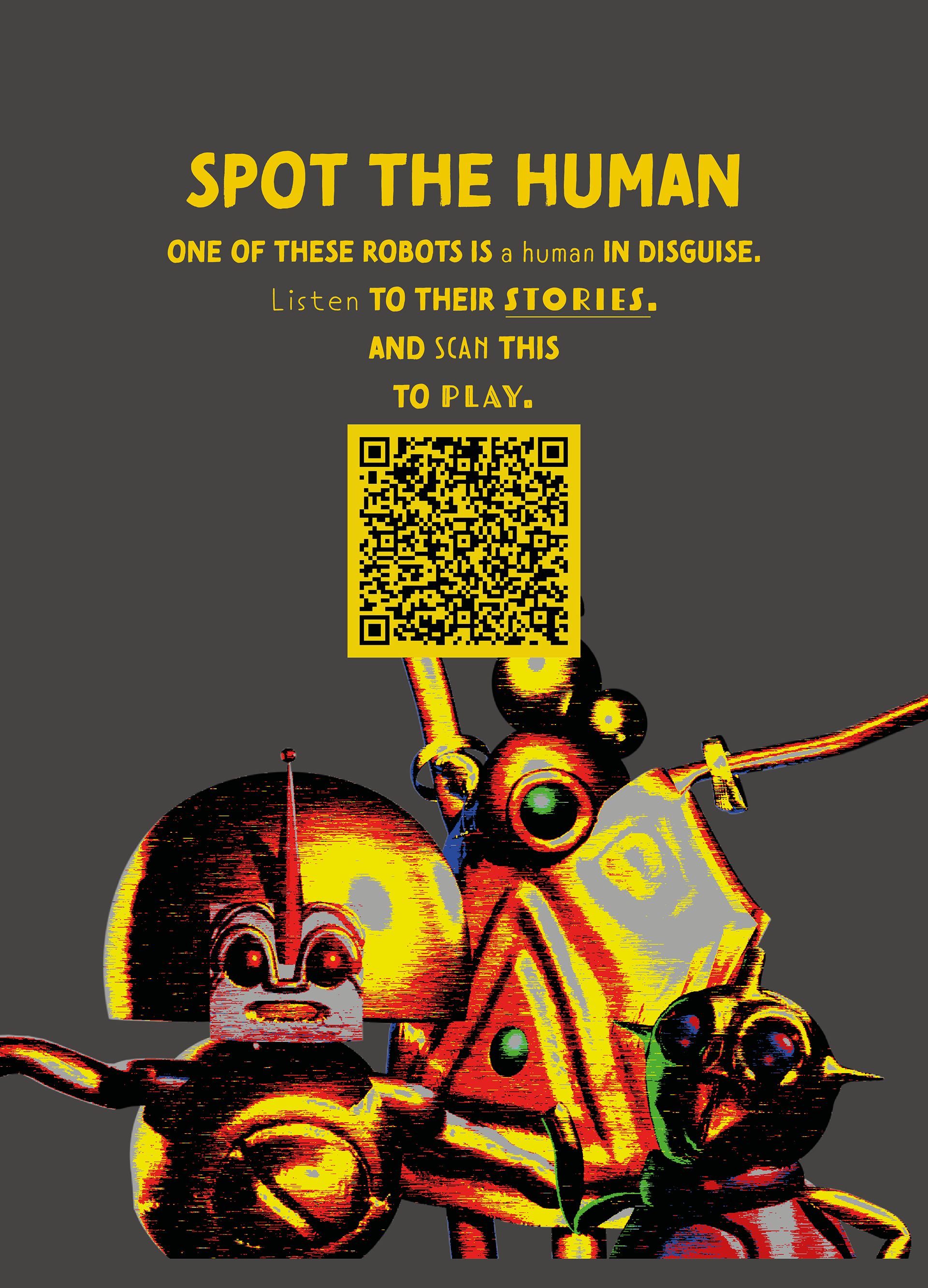
The first stage consists of this video/quiz where the audience is asked to listen to three robots talking about love and guess which one is human. The stories told by two of the robots were written by content generating AI that I had fed the word "love" to. Only one was taken directly from a memoir written by an actual human. This was a fun exercise that made me laugh quite a bit because I was truly astonished with the stories the AI generated. They were so long-suffering, bleak and dramatic! The AI generated text inspired me to set the scene with a backstory.
In one critic, Hazel Brill asked me where the robots came from to my mind, and I honestly do not know. In another instance, Jennet asked me to think about this retro sci-fi aesthetic that I am so drawn to, and I can only say that it probably comes from a place of nostalgia – from an emotional space that echoes my use of archival footage and old things. Another reason might be deep sub-conscious infiltration by Doctor Who. During my late teens, I clung to Doctor Who as if my life depended on it, and I always return to it for comfort during hard times. And though I have not rewatched anything in the last two years, here we are with three robots that are very reminiscent of Whovian bad CGI.
I noticed that graphic design has been an important aspect of this project – used here for the poster and in other instances in later stages. As with Maze, I have also been considering how to show this work in a gallery so that its theatrics can be experienced within a physical space.
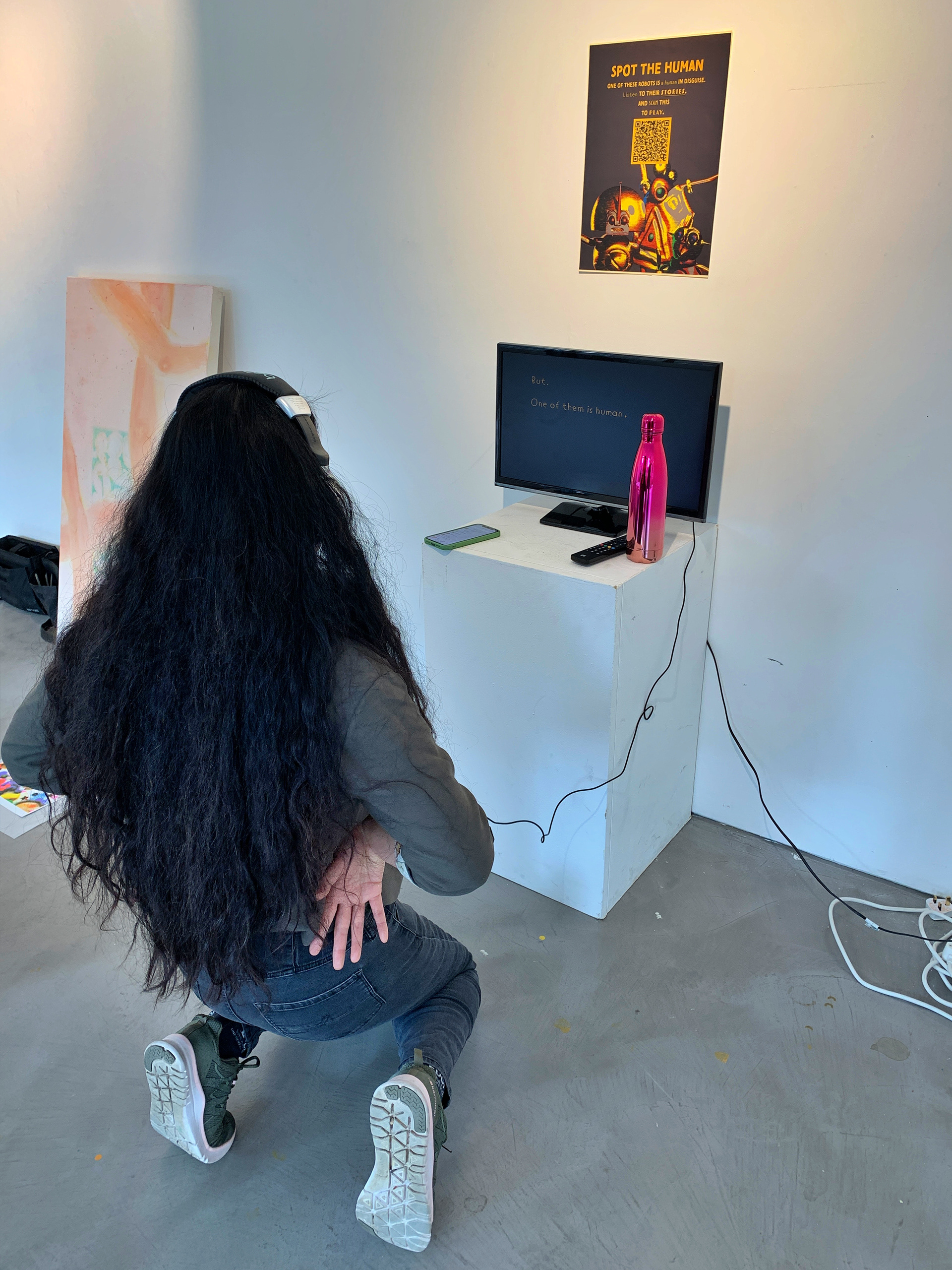
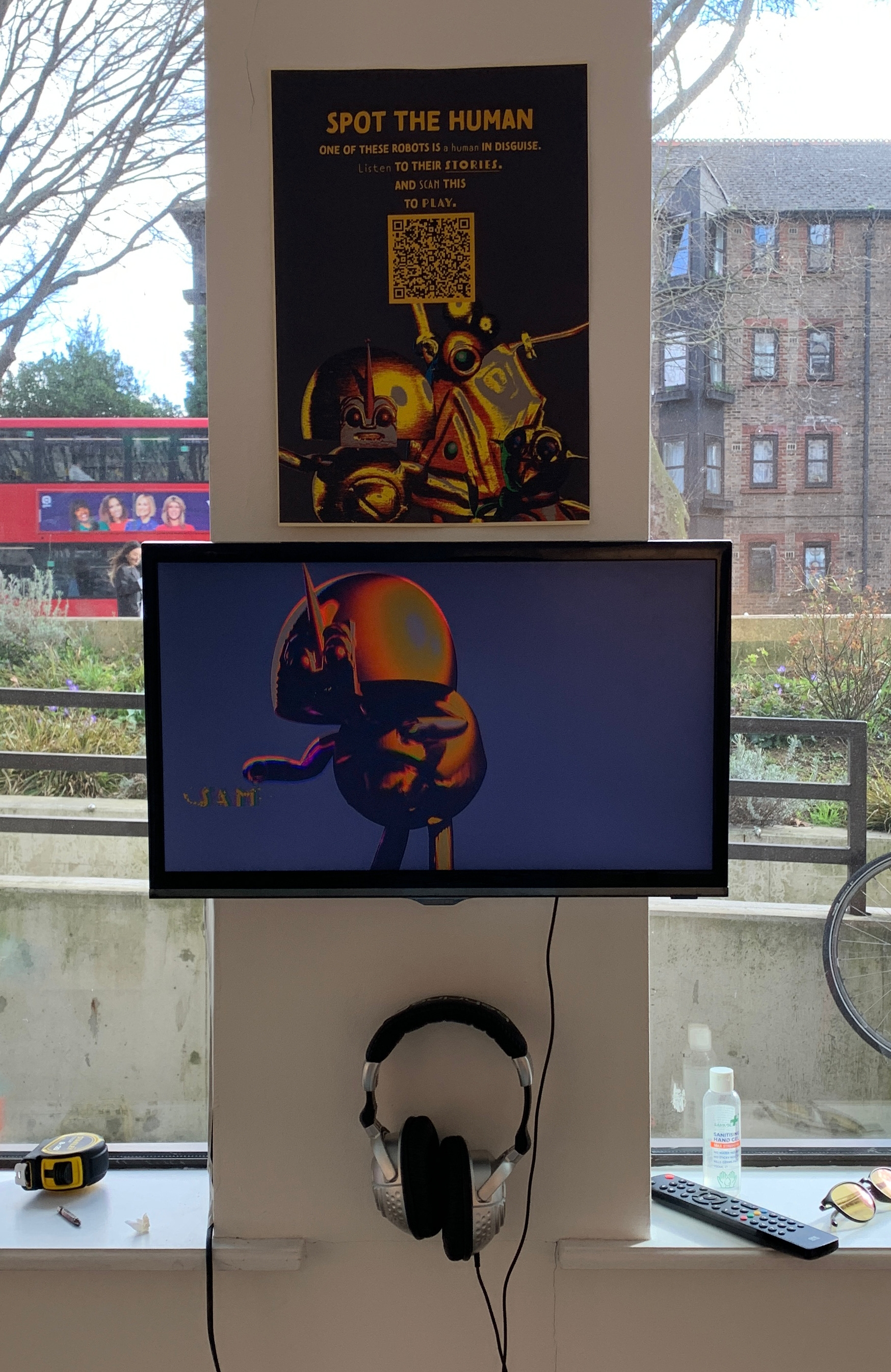
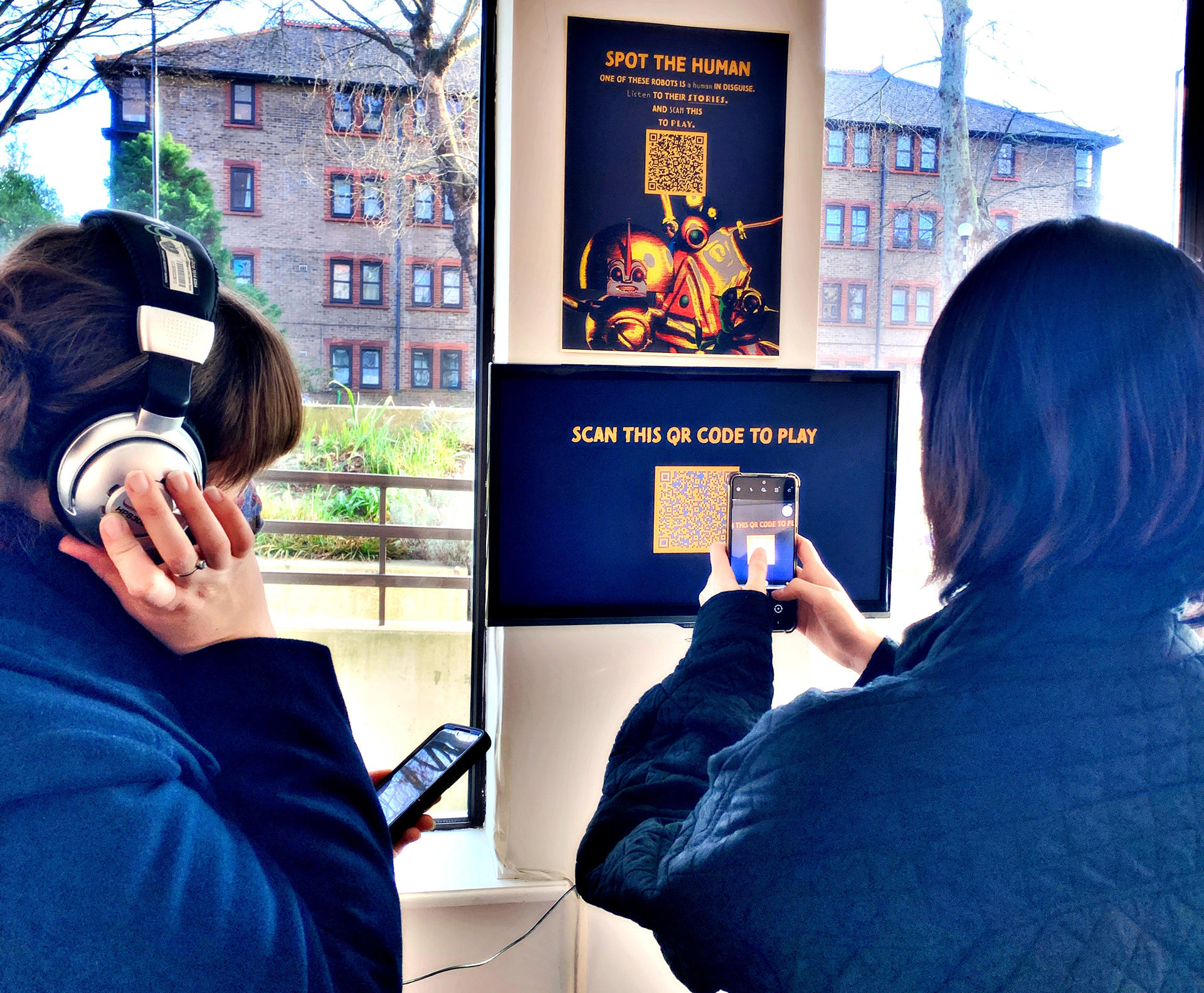
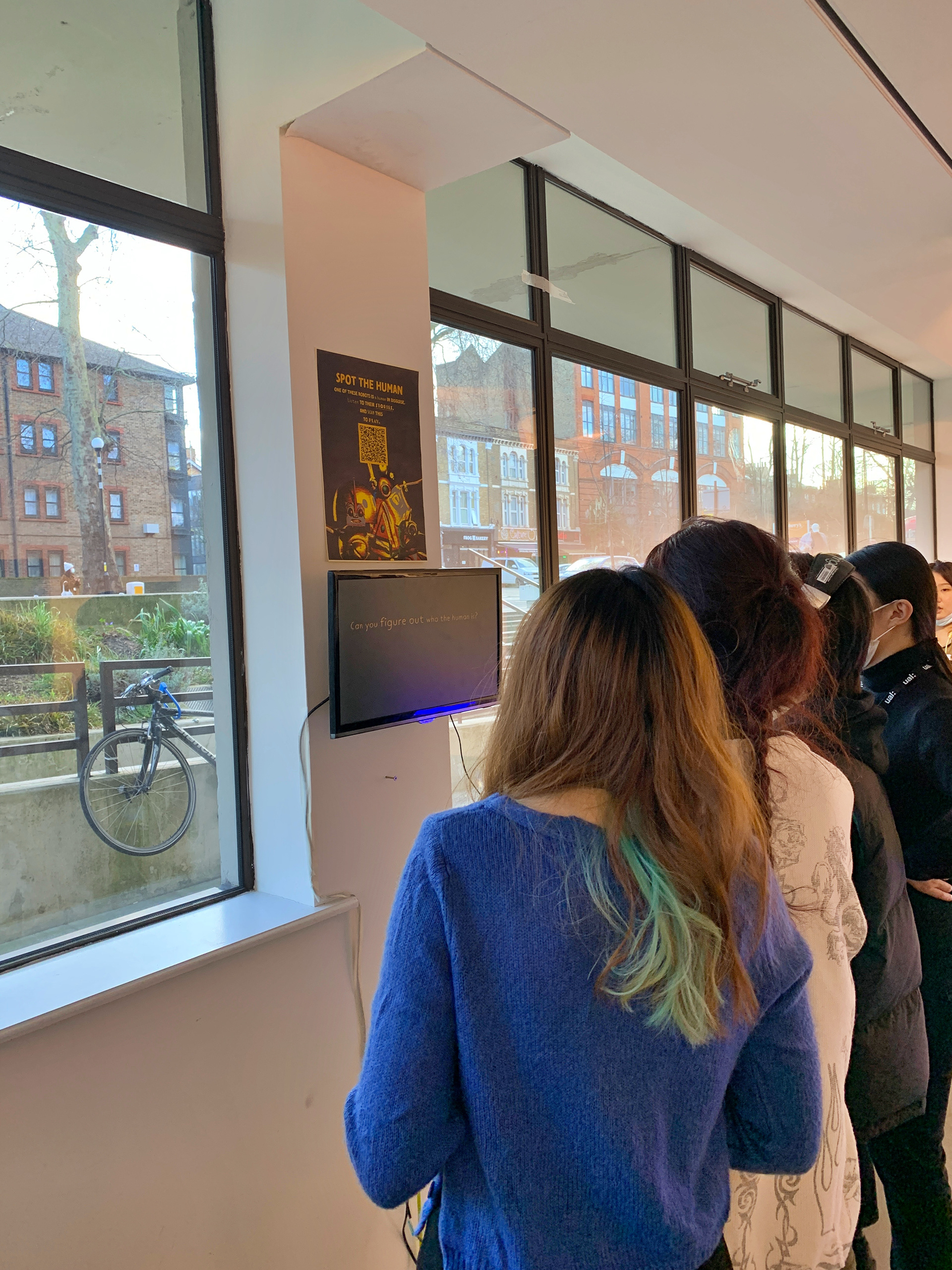
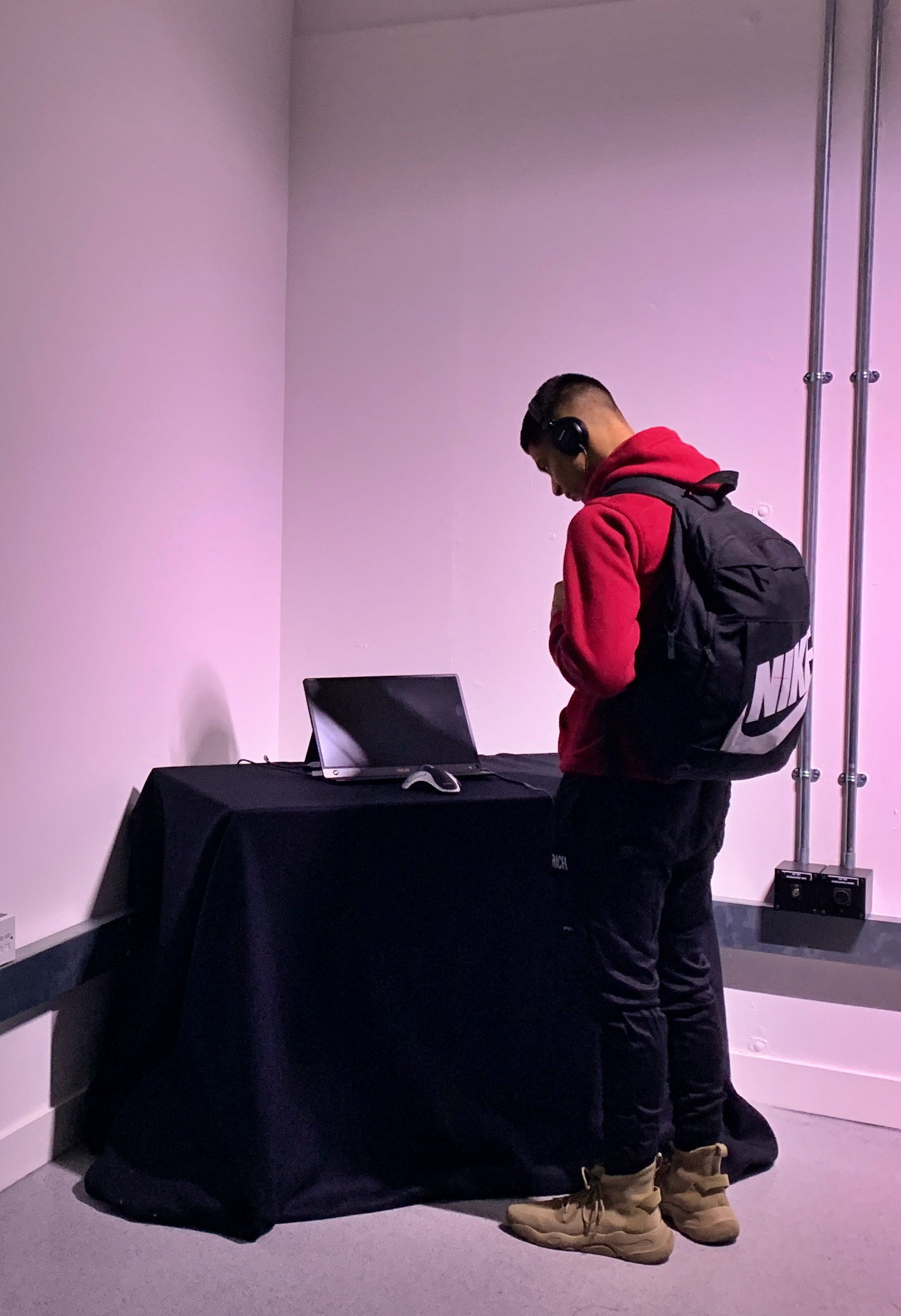
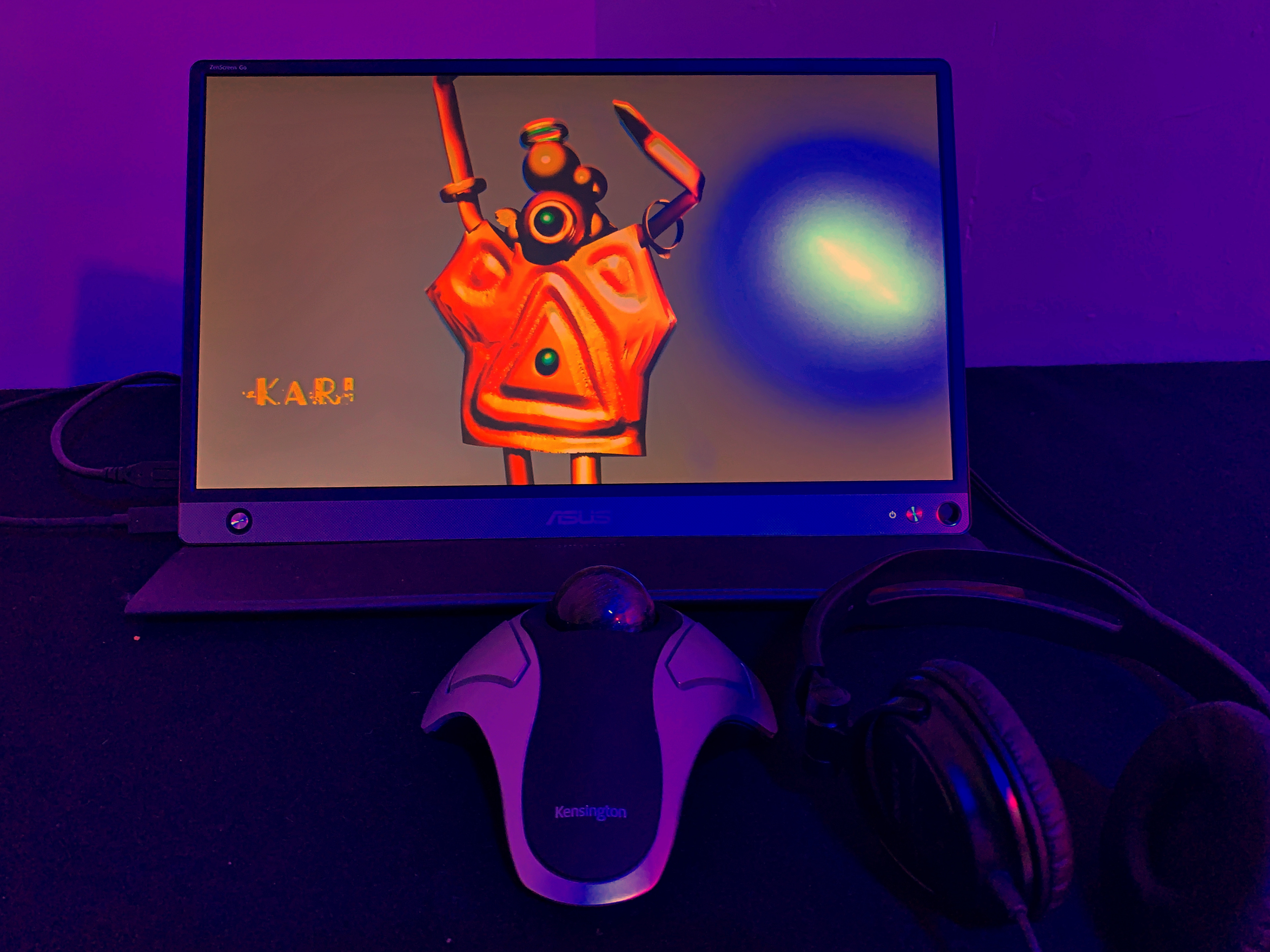
The first chance I had to test Spot the Human was at 'Dialogues' at the Camberwell Space. After initial placement issues, I think the work was relatively successful in how it was installed (see left). People were interested and one student told me she thought it was refreshing to have something interactive in a sea on paintings and sculptures. I think visitors were curious to see what the strange looking robots were about. They even had fun! One small group became competitive as each member of the group tried to guess which robot was human!
However, other than discovering that people are willing to engage with this kind of work in a gallery, Spot the Human did not give me a great deal of clarity about what I should do next. The results from the quiz showed that most people do not guess the human correctly. This could mean that my idea to anonymise lived experience might work. So I began to meander vaguely in this direction.
It wasn't until I met Georgina Bednar, artist/facilitator and one of the main mentors on the Venice Fellowship that I knew what I should do in the next stage. But before we move on, another note with regard to Spot the Human in a gallery space – I did not think that the way it was installed at 'Dialogues' did the playful, theatrical aspects of the work justice. So I wanted to try building a sci-fi looking console for the pop-up show. Though all the elements are not in place yet, I think with the correct lighting and paint, it could be a success.
Spot the Human in the gallery at 'Dialogues' and the Comp Arts Pop-Up Show
Stage 2 Who Am I?
This stage was the most exciting and intellectually satisfying stage on the project so far. Throughout February, March and April 2022, I attended workshops and inductions for the Fellowship. I met with all the other fellows and our mentors and we each discussed our work and talked about some the artists that influenced us. As I mentioned before, I also met Georgina Bednar who facilitated a number of workshops with us, and it was in one of these workshops that the idea of splitting one's identity into various parts became clear to me. I had always thought of this as our "selves" and had even conceptualised an illustration to show these "selves" as layers of an onion – building on top of each other. Georgina's workshop enabled me to see them as identities that are separate but coexist within one person.
We also spoke with Sonya Boyce about her work at the Venice Biennale now and also how her practice has changed over time. Her current practice, as I understand it, involves, bringing a bunch of people together and seeing what happens, without any envisioned outcome. I decided to adopt this perspective for my workshop Who am I? I had designed creative exercises but I had no idea what I should expect to come from it. Nevertheless, I had a very strong feeling that I should do the workshop, and so I did.
In preparation for the workshop, I set about separating parts of my own identity (Picture 1 below). I tried to visualise them with drawing but I only drew blanks. I found it easier to work with old photos – assigning an identity to each part.
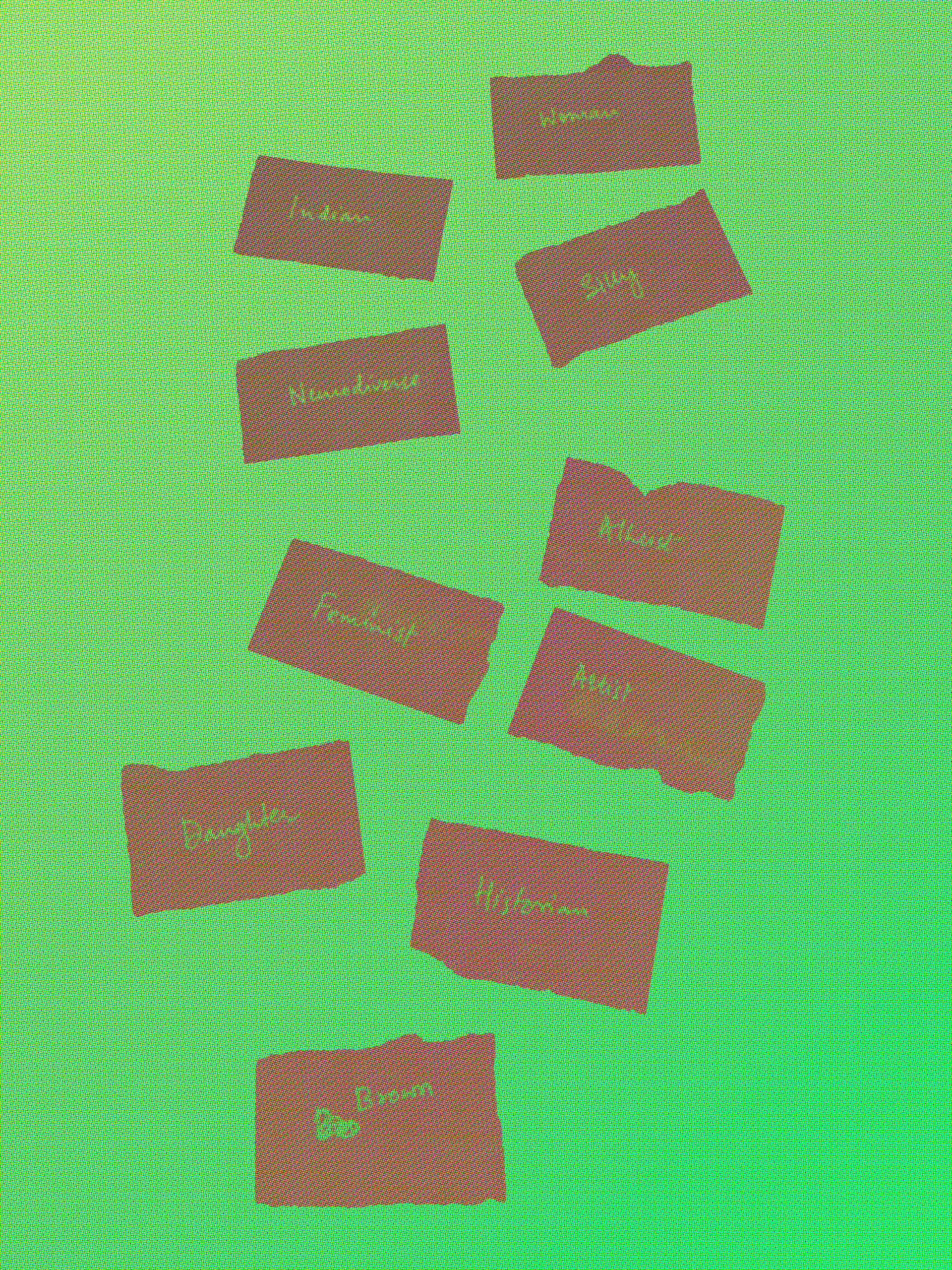
Picture 1
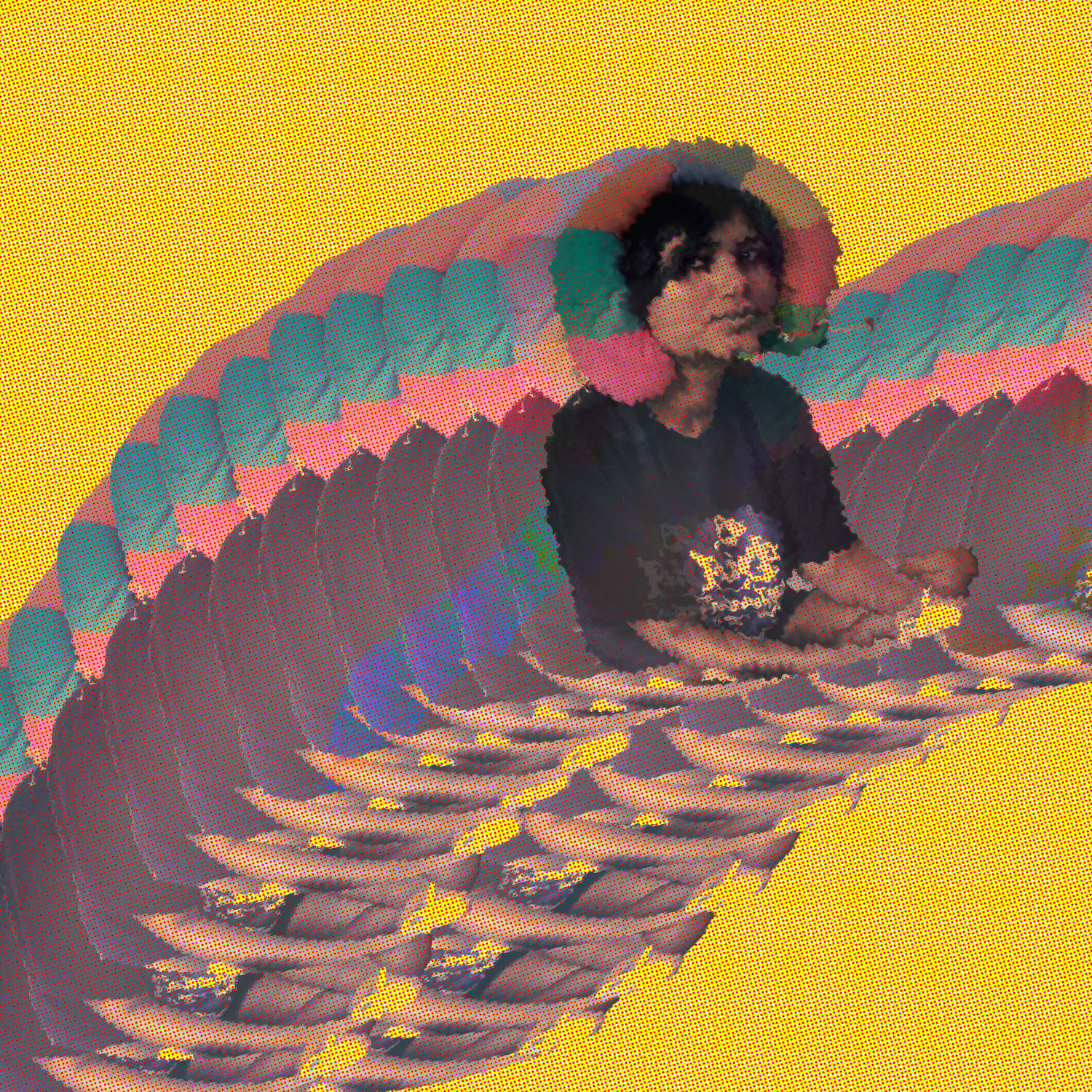
Full Stack Historian
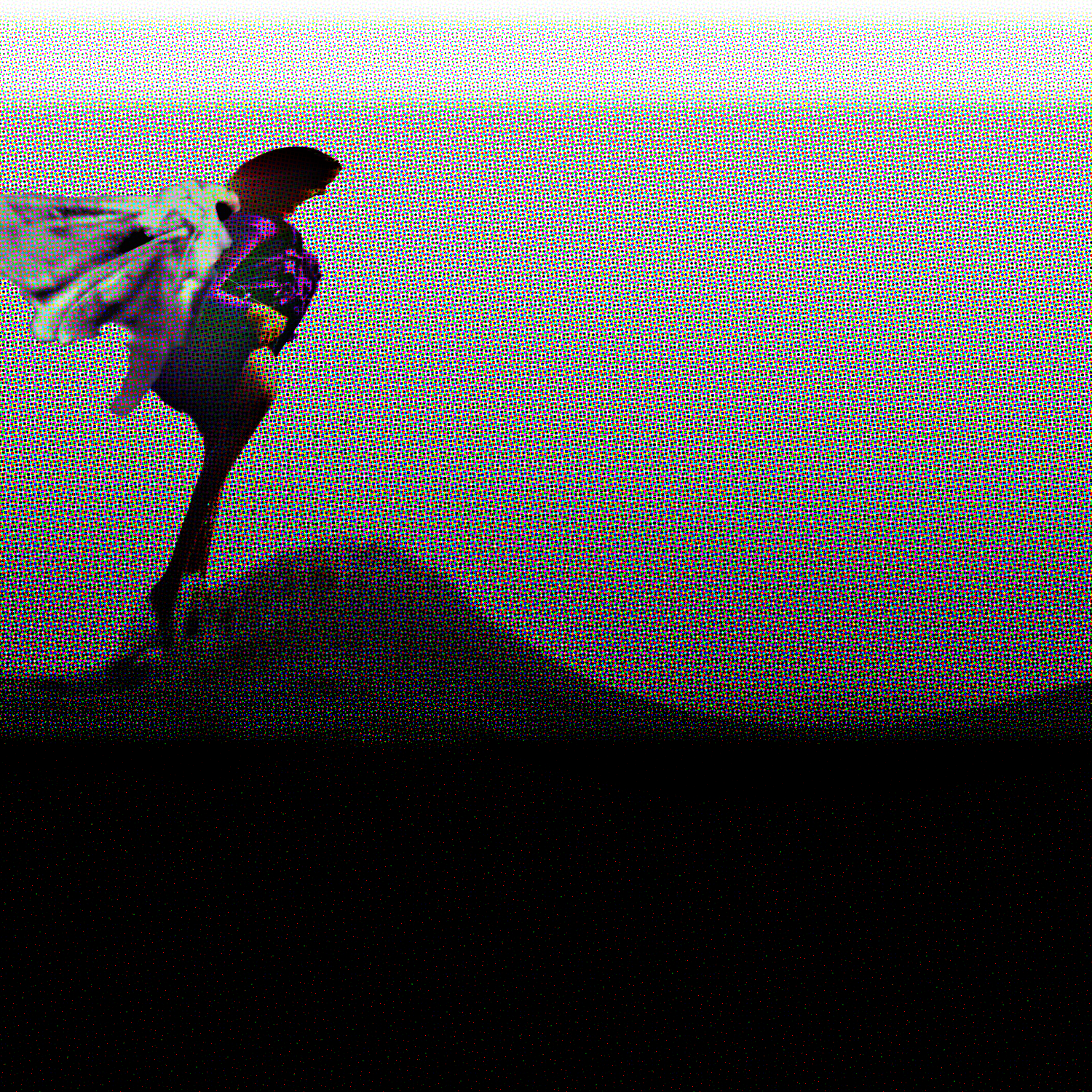
Brown Daughter
Memories
Wholesome
Wholesome 2
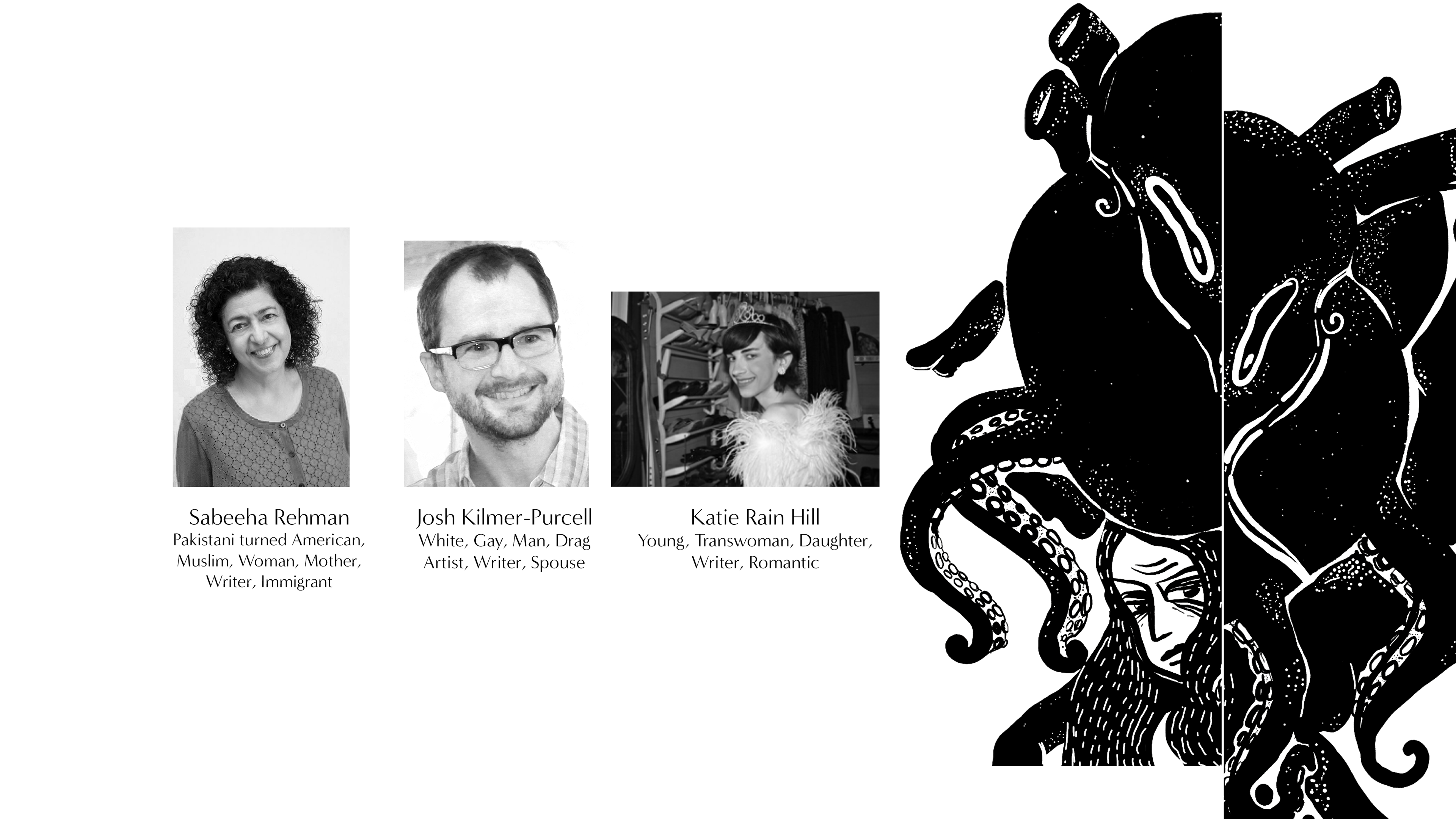
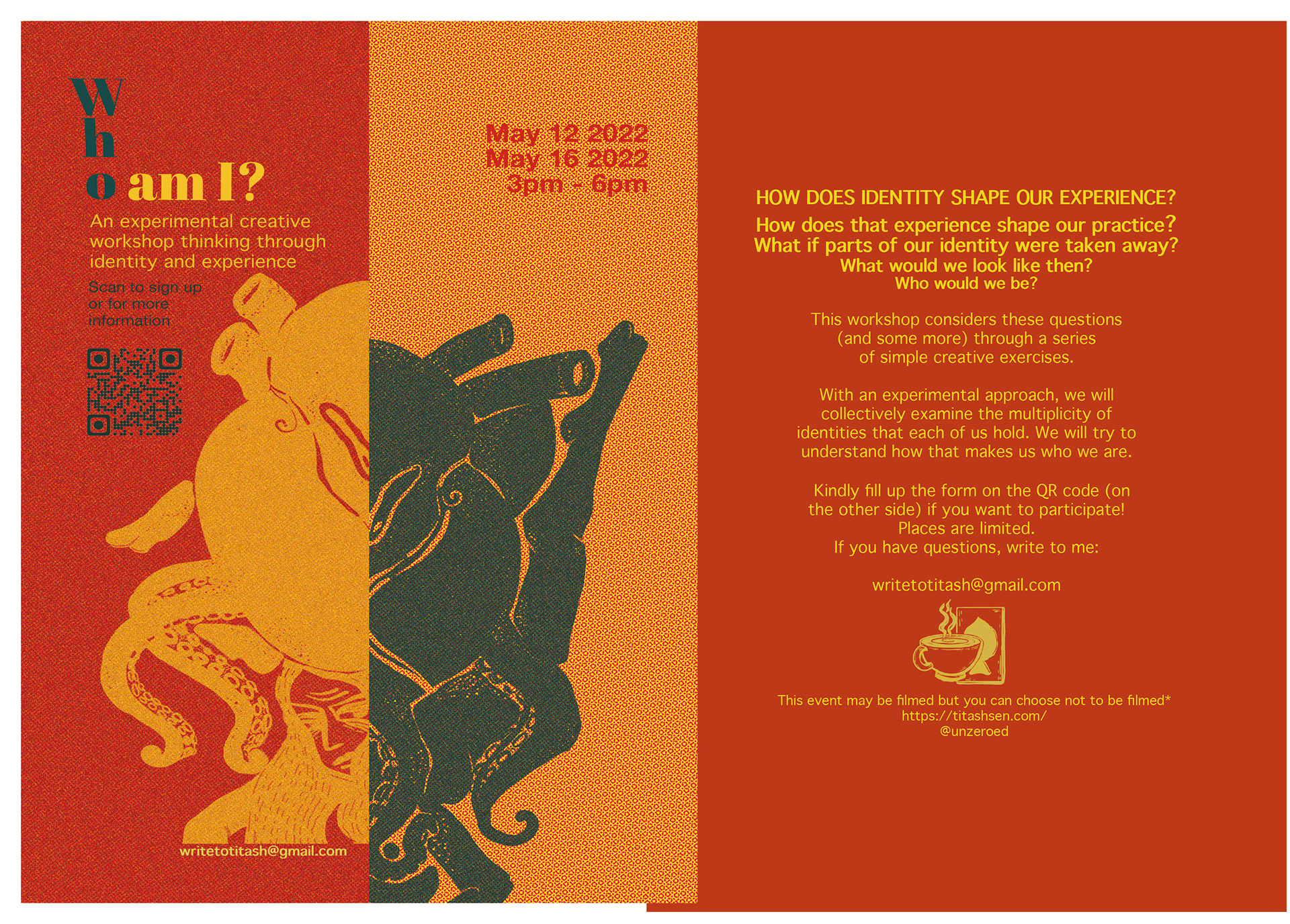
I conducted my workshop on 16 May 2022, armed with a flier and a presentation (see right). In the first exercise, I played three videos, each sharing a completely anonymised experience. I asked my participants to assign three identities to each experience.
This threw up interesting results – some people found this exercise extremely hard. Some others interpreted the experiences through their own, and assigned identities that were familiar to them. When I finally revealed who the experiences belonged to, we had an interesting discussion about perception and the experiential lens through which we make sense of our world. The entirety of this exercise is filmed and is available to all the participants to use for their own practice.
In the second exercise, I asked the participants to separate parts of their identity and visualise them as I had. Though they had the option to draw or use photographs, or anything really, everyone reached straight for the Play Doh I had brought for this exercise.


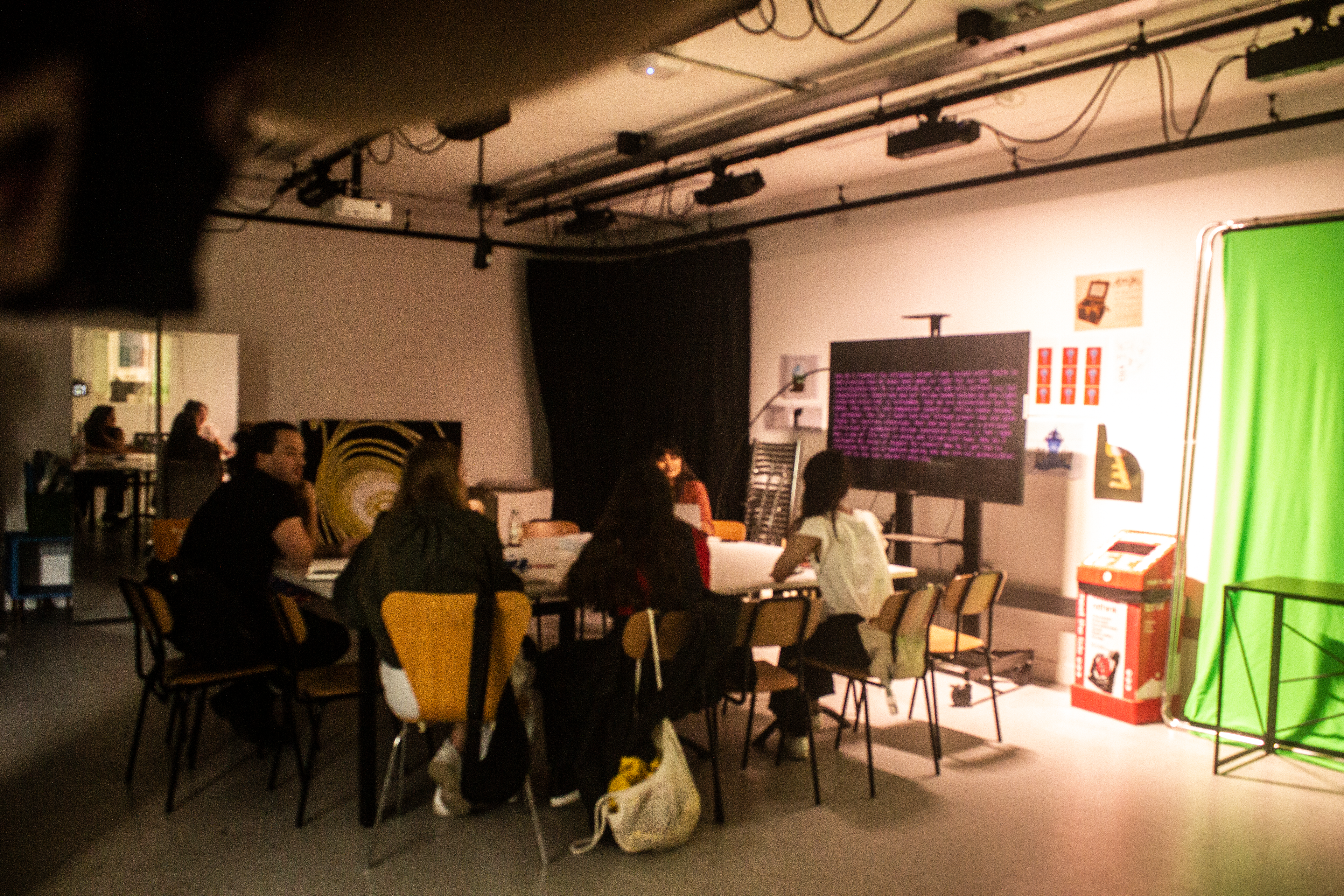
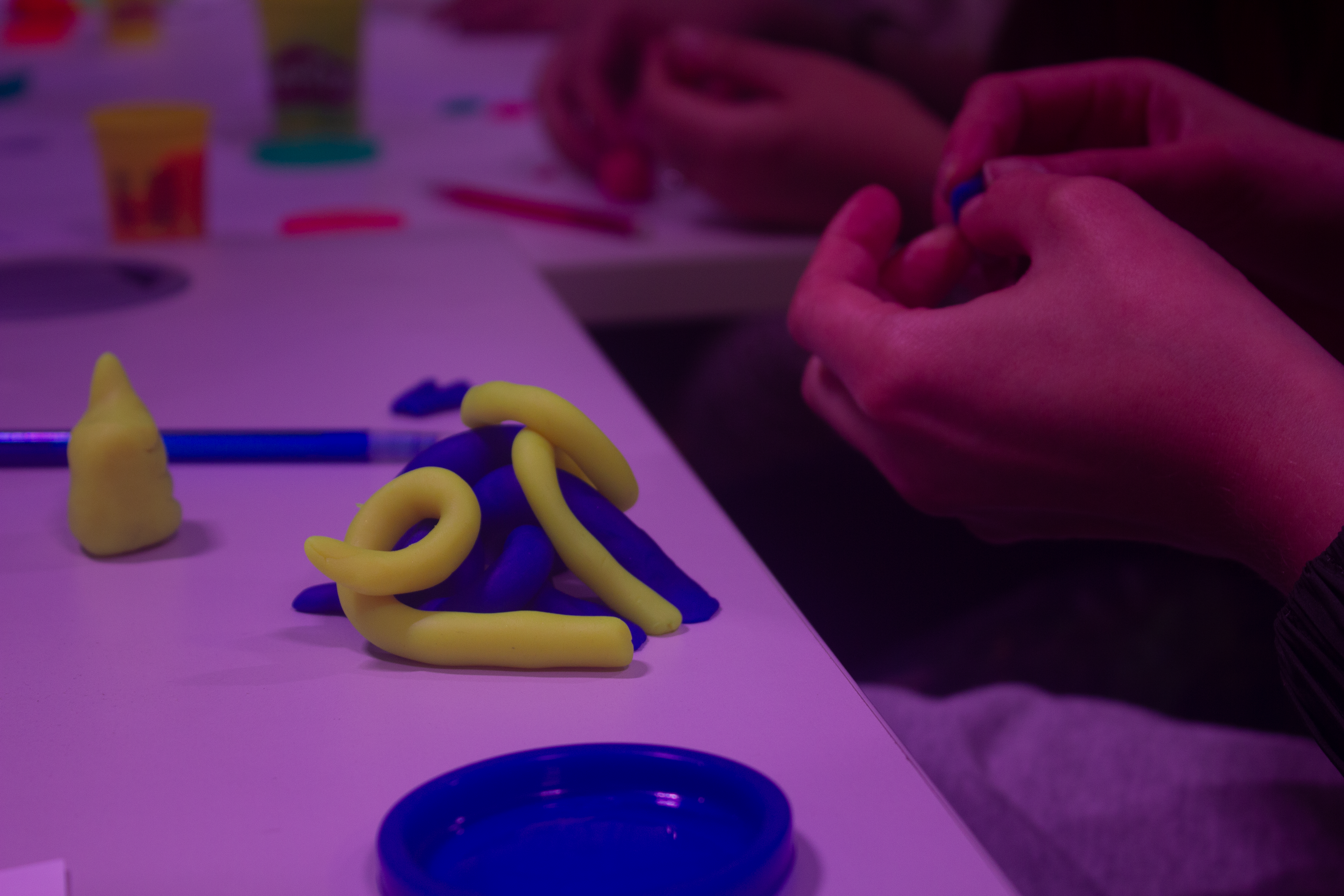
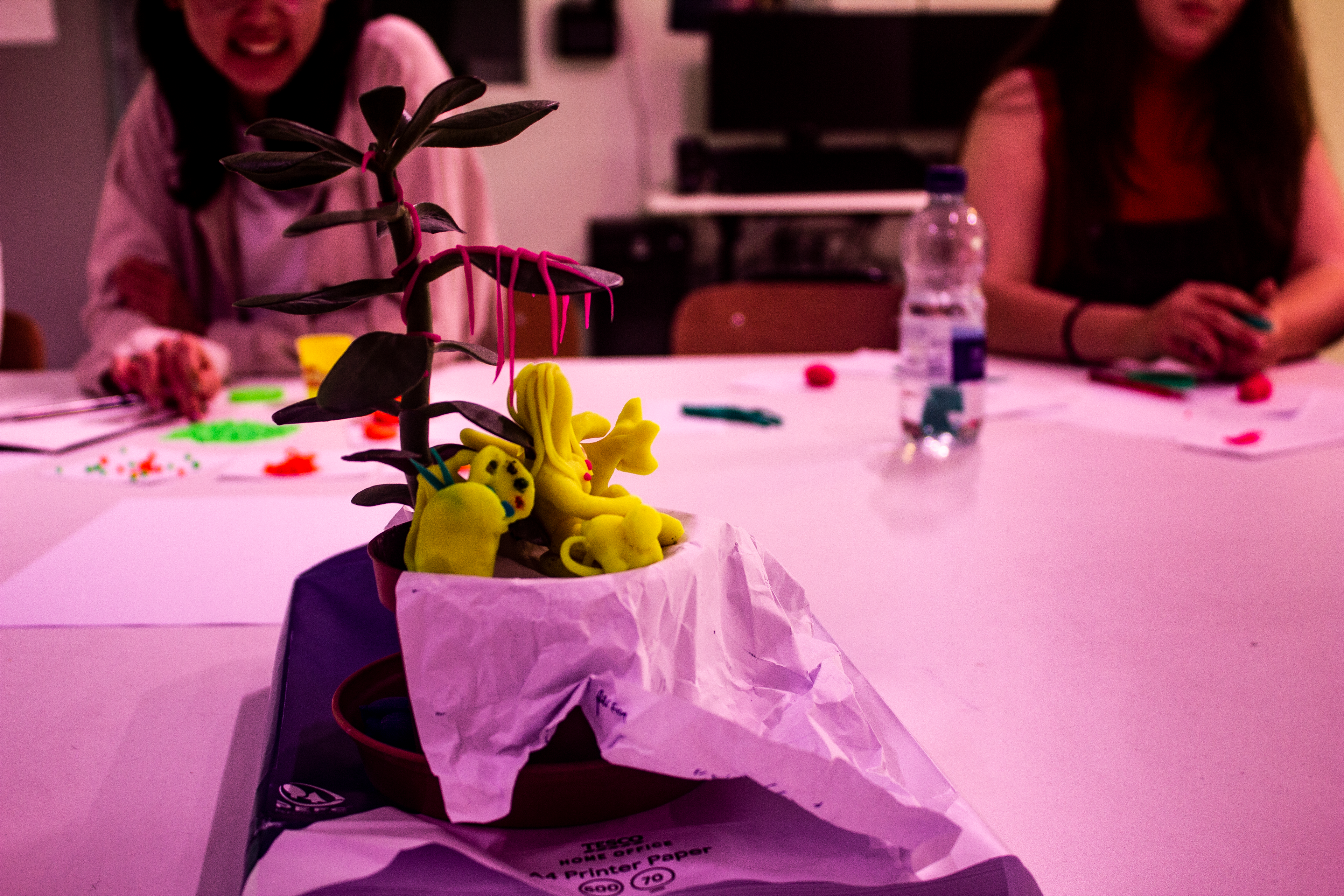
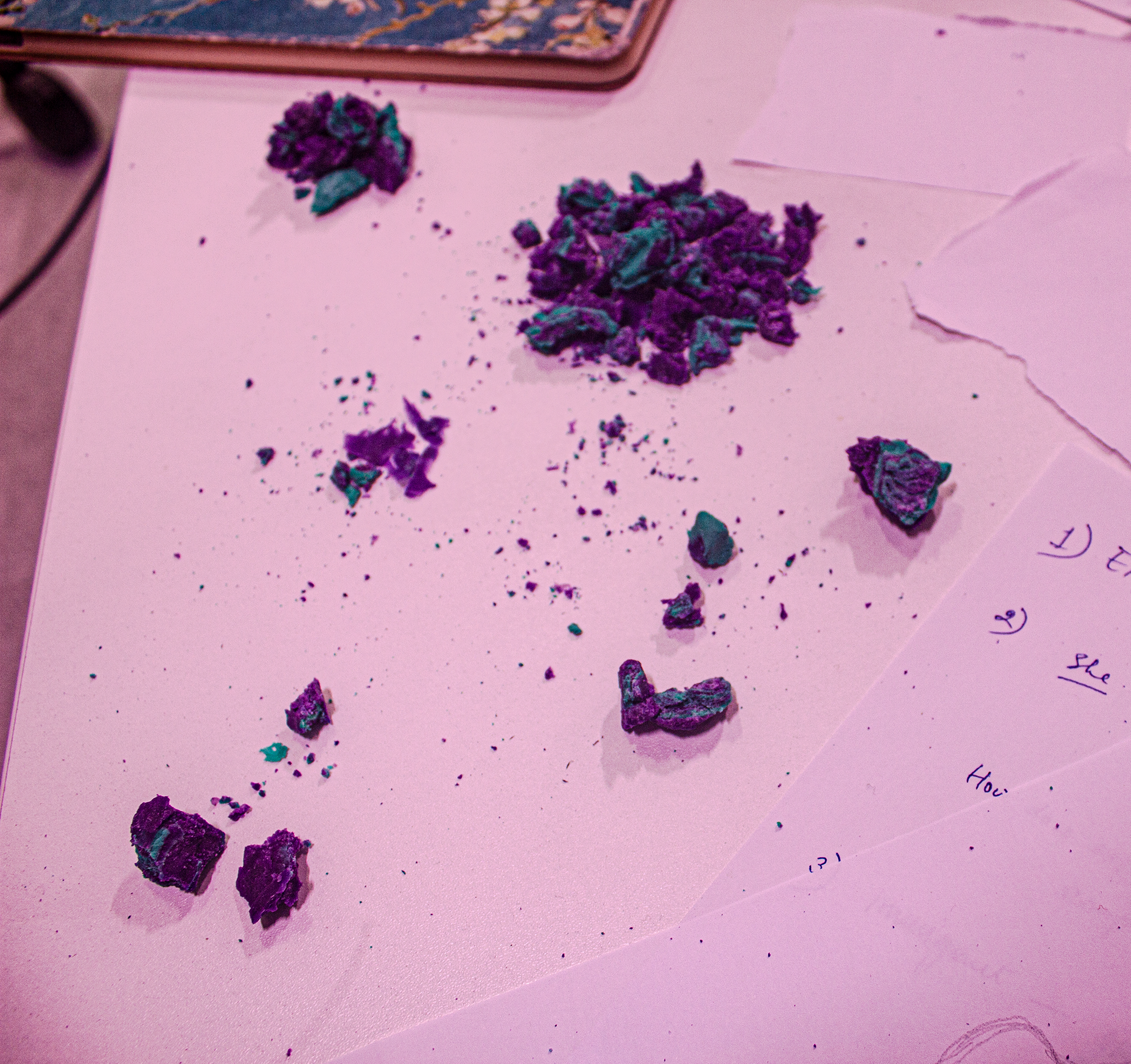
The second exercise allowed us to focus on how we conceptualise each part of our identity. Each participant talked through their visualisation and we discussed why they settled on a certain form. Some were abstract, and some tried to represent their identities more literally. What we learned from this exercise is that we represent our identities based on our experience of it. For instance, for me the experience of being a woman has been overwhelmingly oppressive. This showed up when I was trying to make abstract playdoh sculptures of my identities (first picture on the right above). I found myself representing womanhood as one small piece balancing two larger pieces on its back. Therefore, we define ourselves with identities, the experiences of which have had the most impact on our lives.
We were left with the question: does identity shape experience? Or does experience shape identity?
Stage 3 Going Somewhere
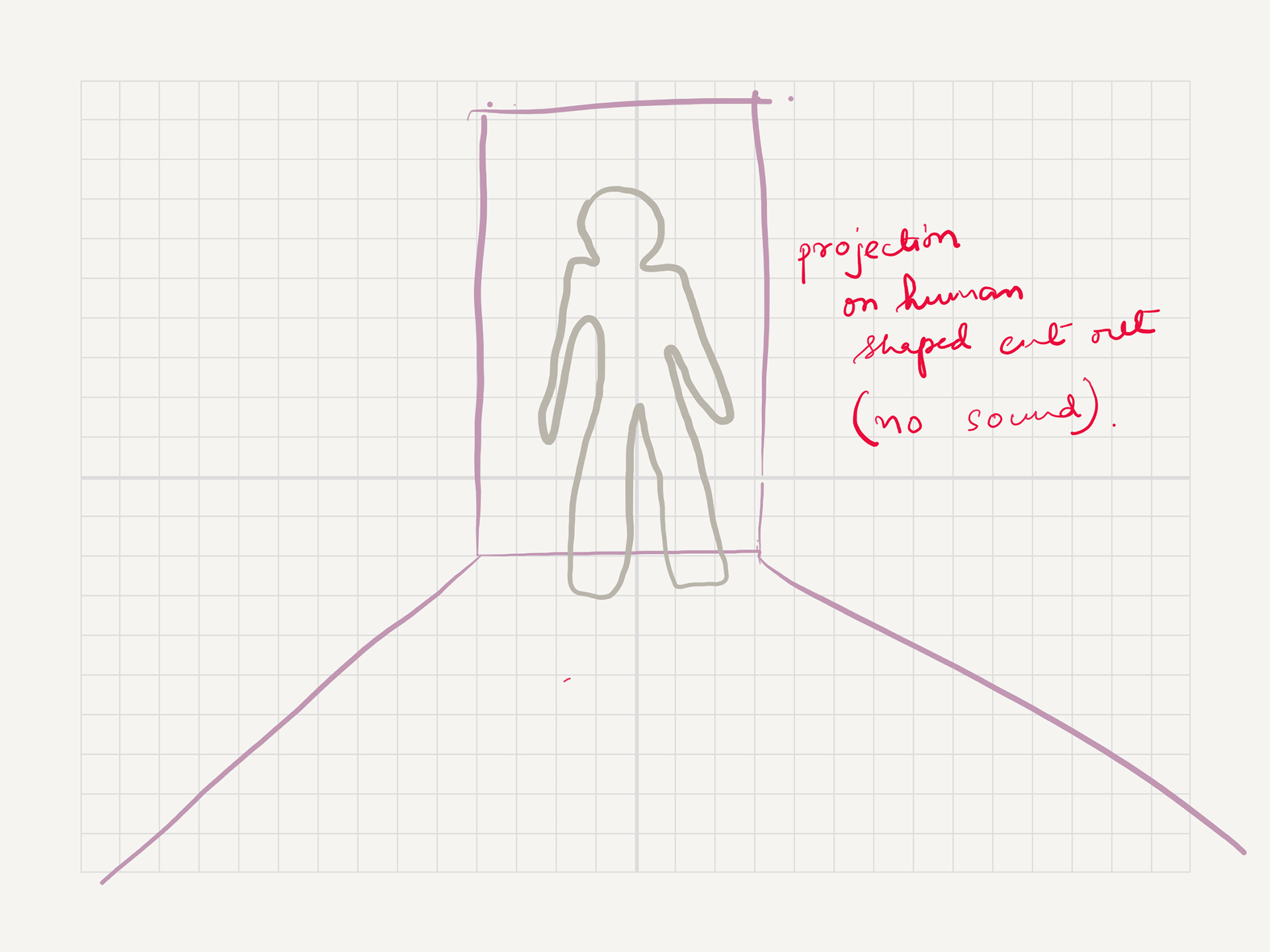
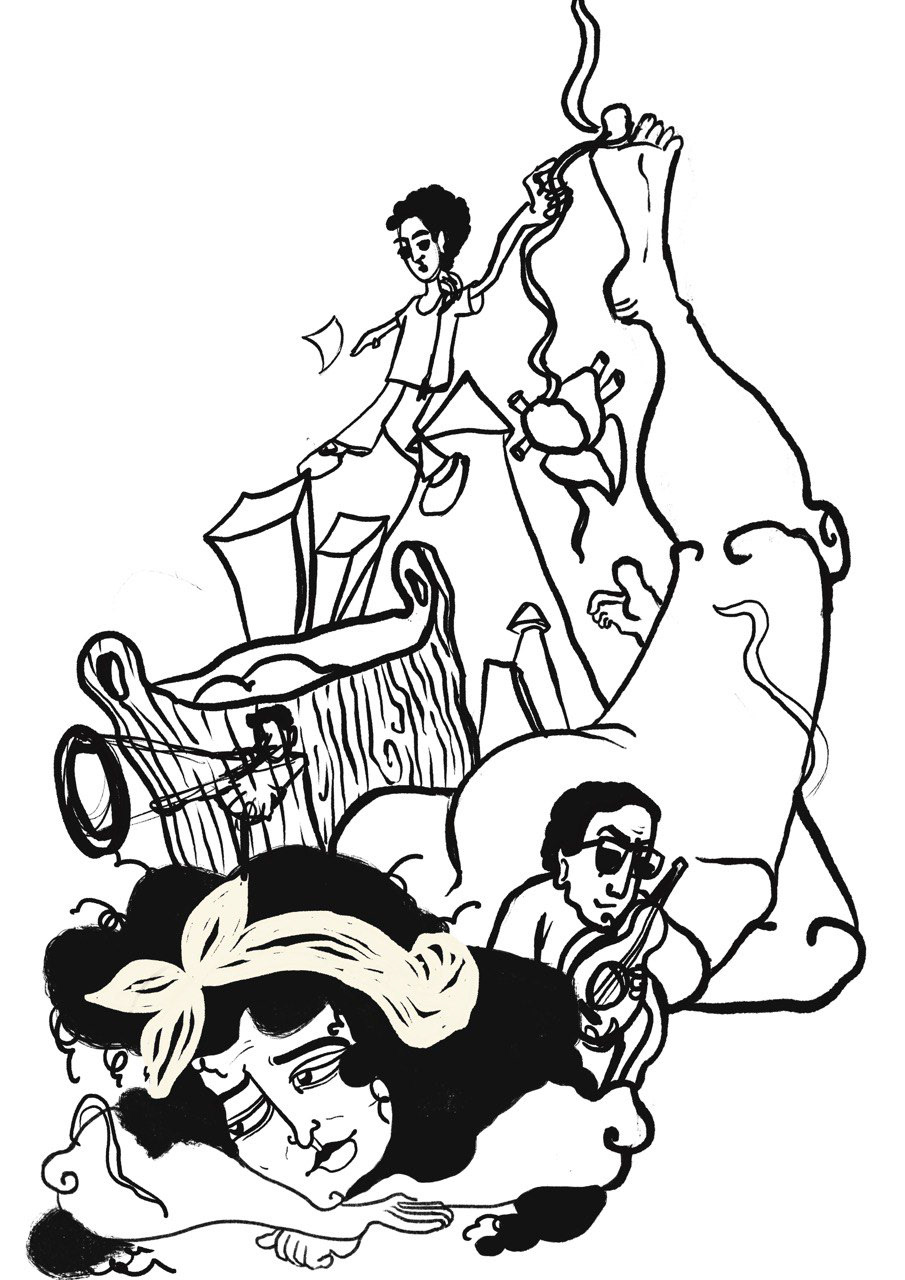
Following this line of enquiry, I have now arrived at a stage where I have been able to conceptualise two moving image works. One, titled, There Are a Lot of People Living in My Body will be a silent work drawn from the representations of identities I possess. Below are some of the sketches I have made to conceptualise this work.
The second work will examine perceptions of a 'foreigner' and will be supplemented by research conducted during my time in Venice.
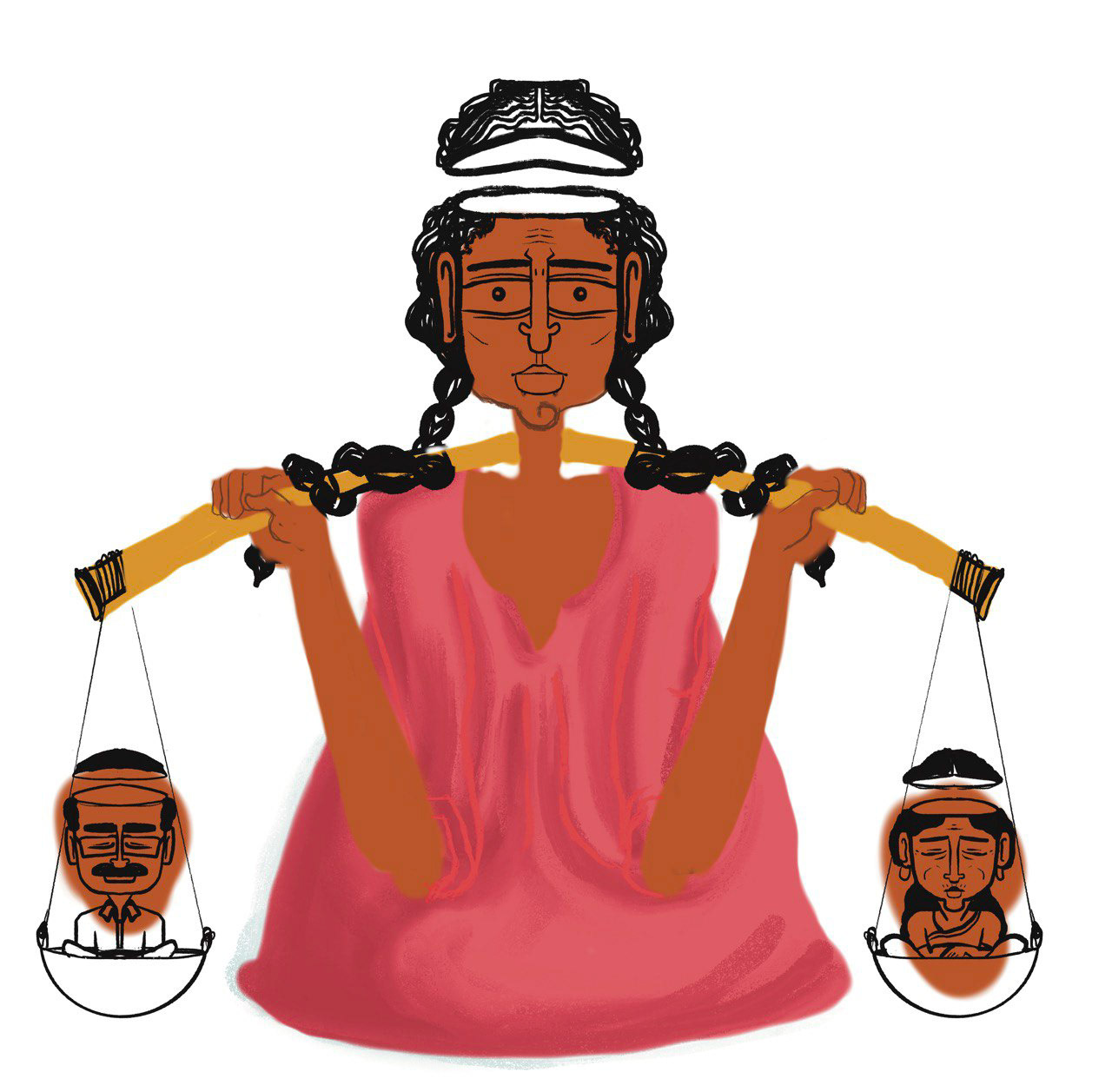
Daughter
Woman