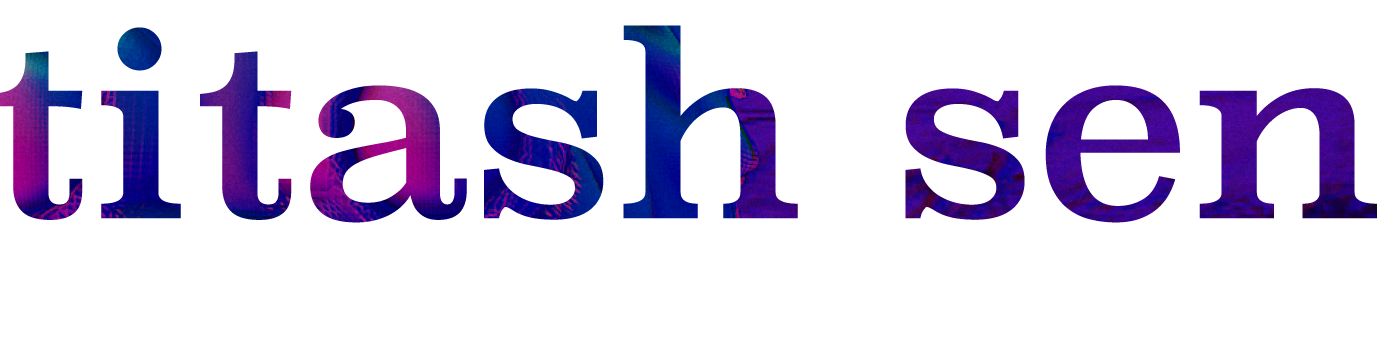

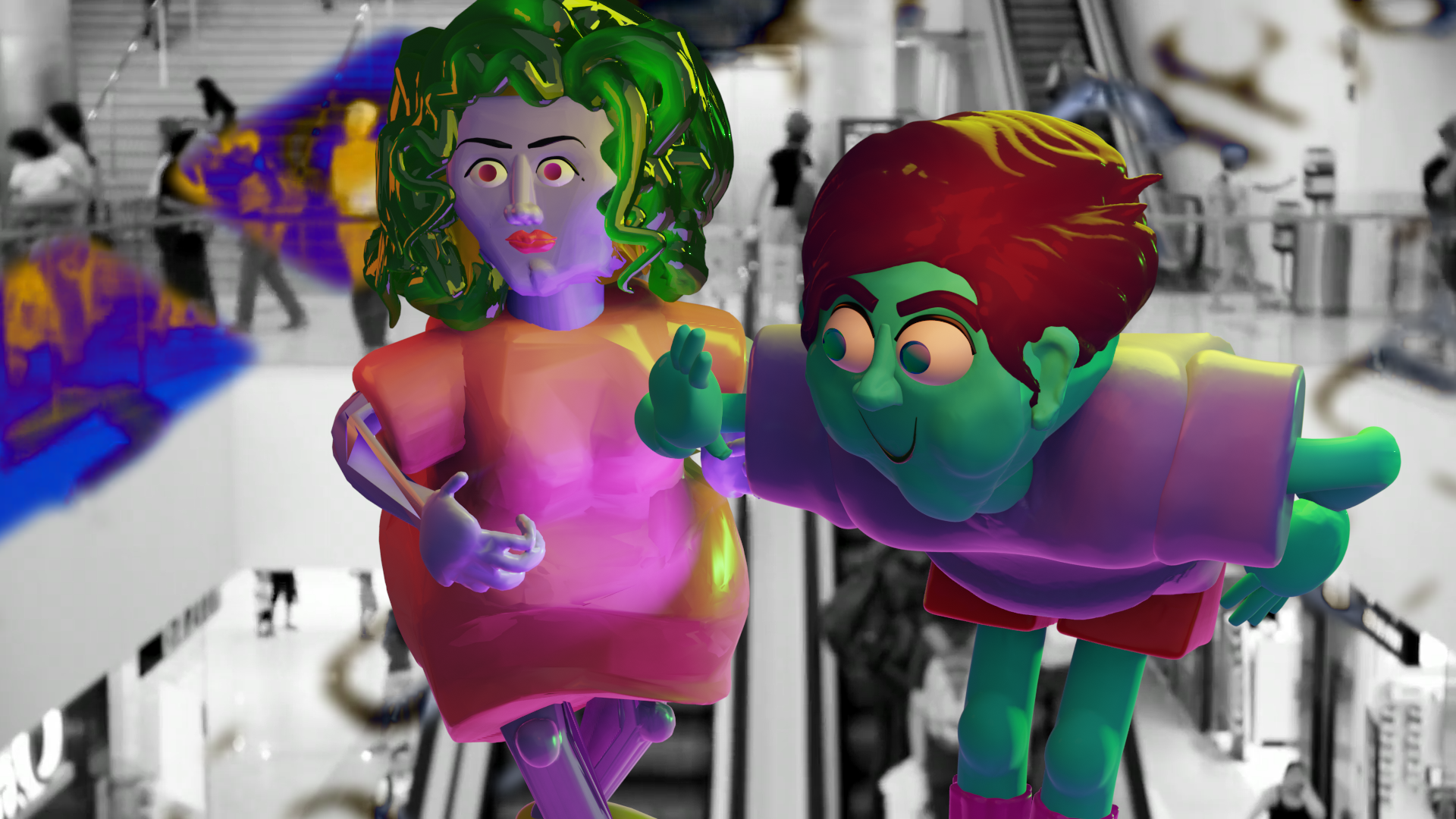
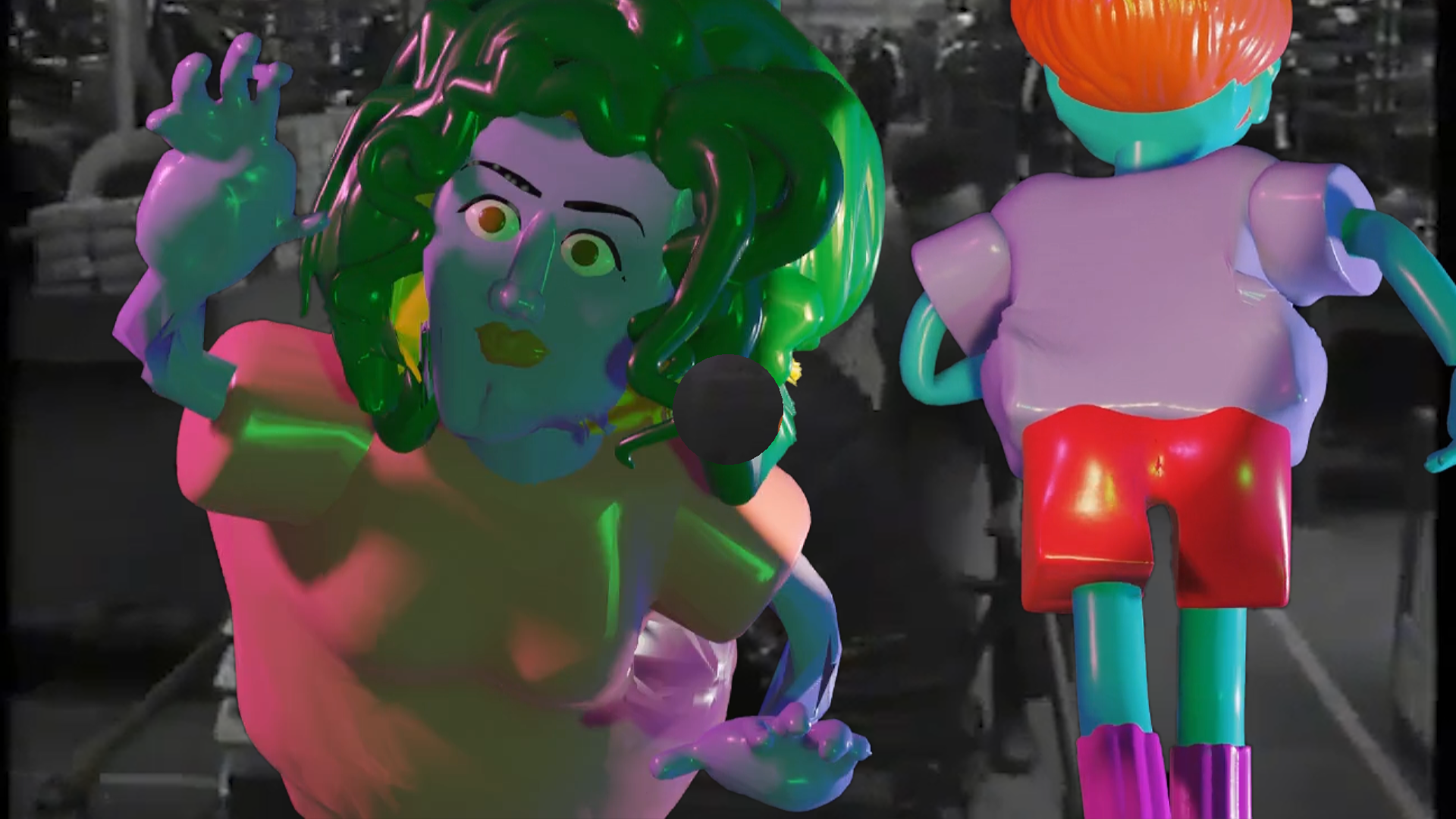
A documentary series on the most peculiar species that inhabit our planet – humans.
Maze
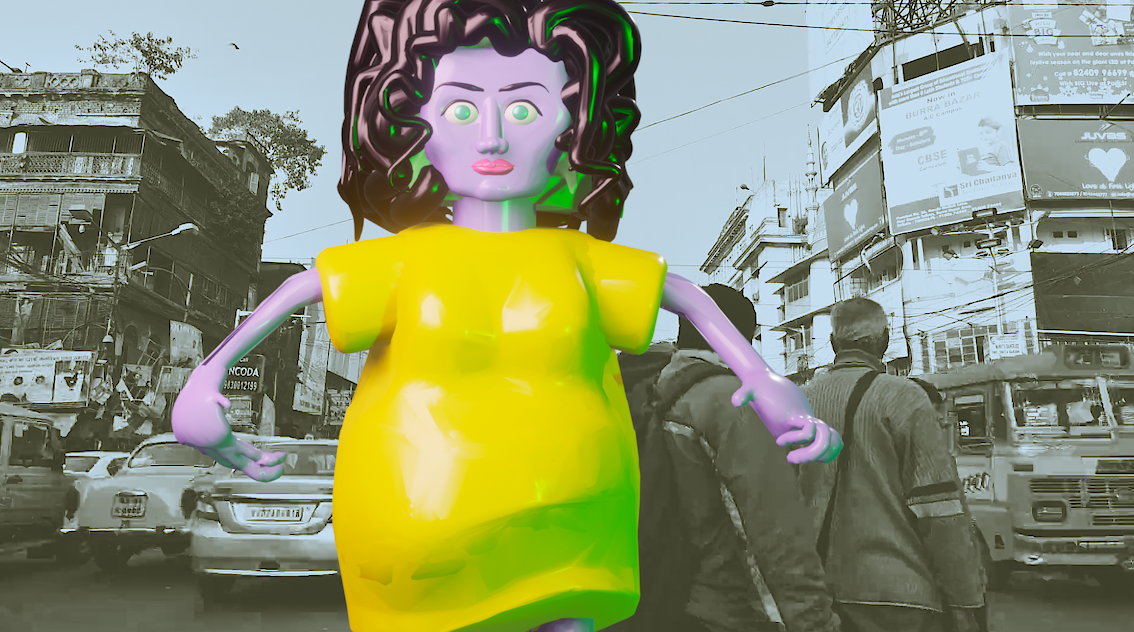
A documentary filmmaker observes a young woman in the wild.
A documentary filmmaker observes a young woman in the wild.
Maze – The Mystery of Money
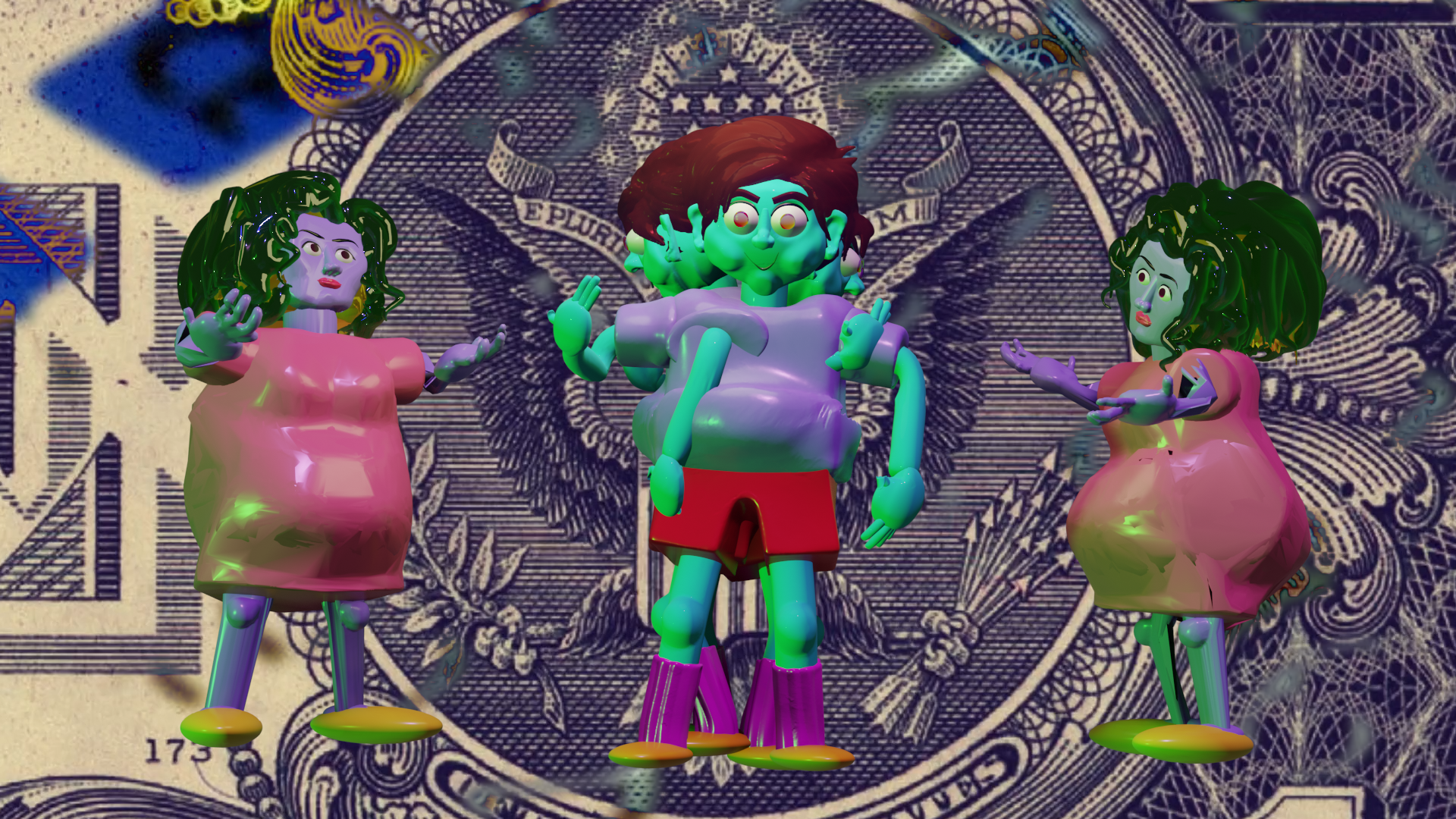
A documentary filmmaker observes the curious phenomenon of "money".
A documentary filmmaker observes the curious phenomenon of "money".
In the Gallery
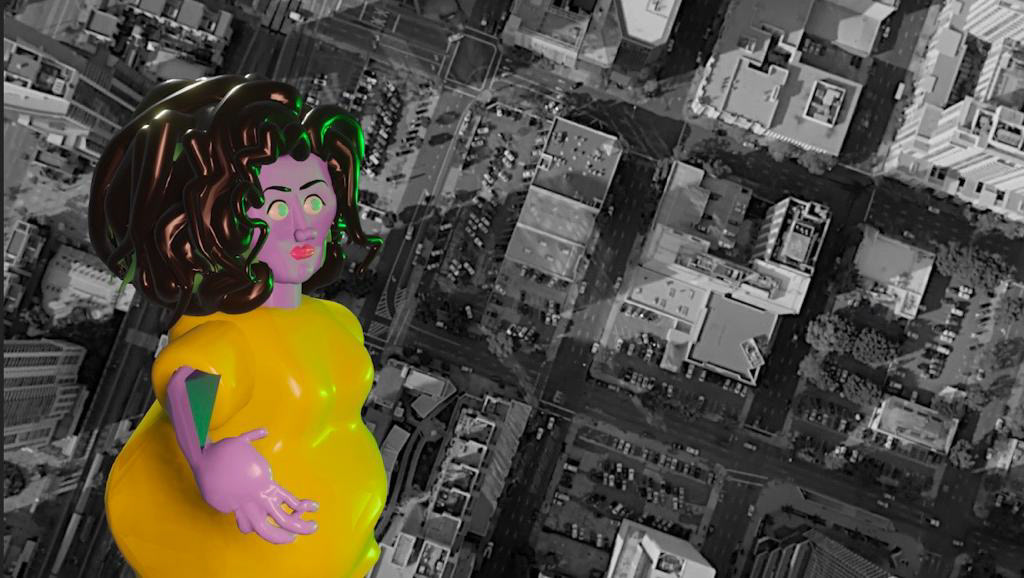
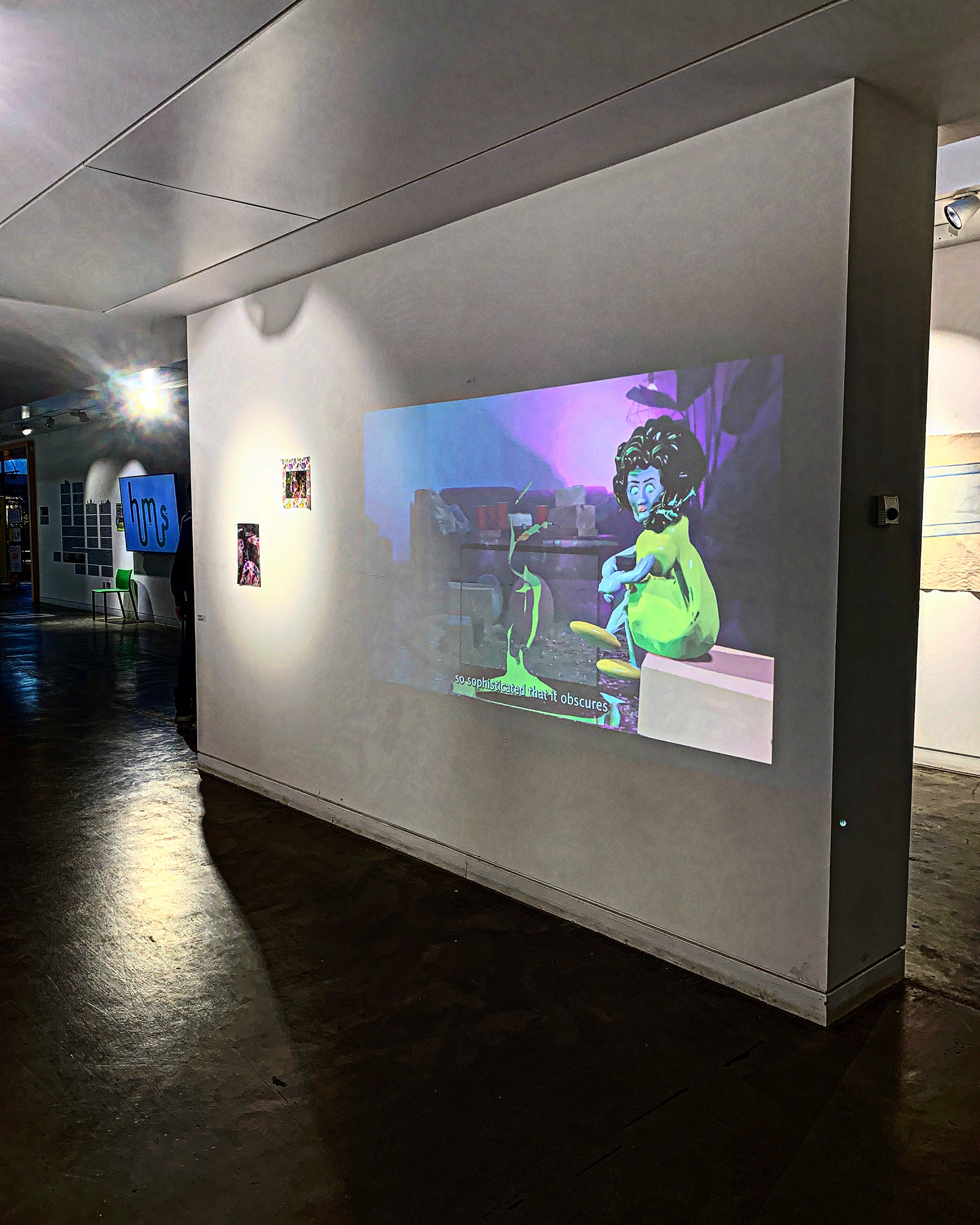
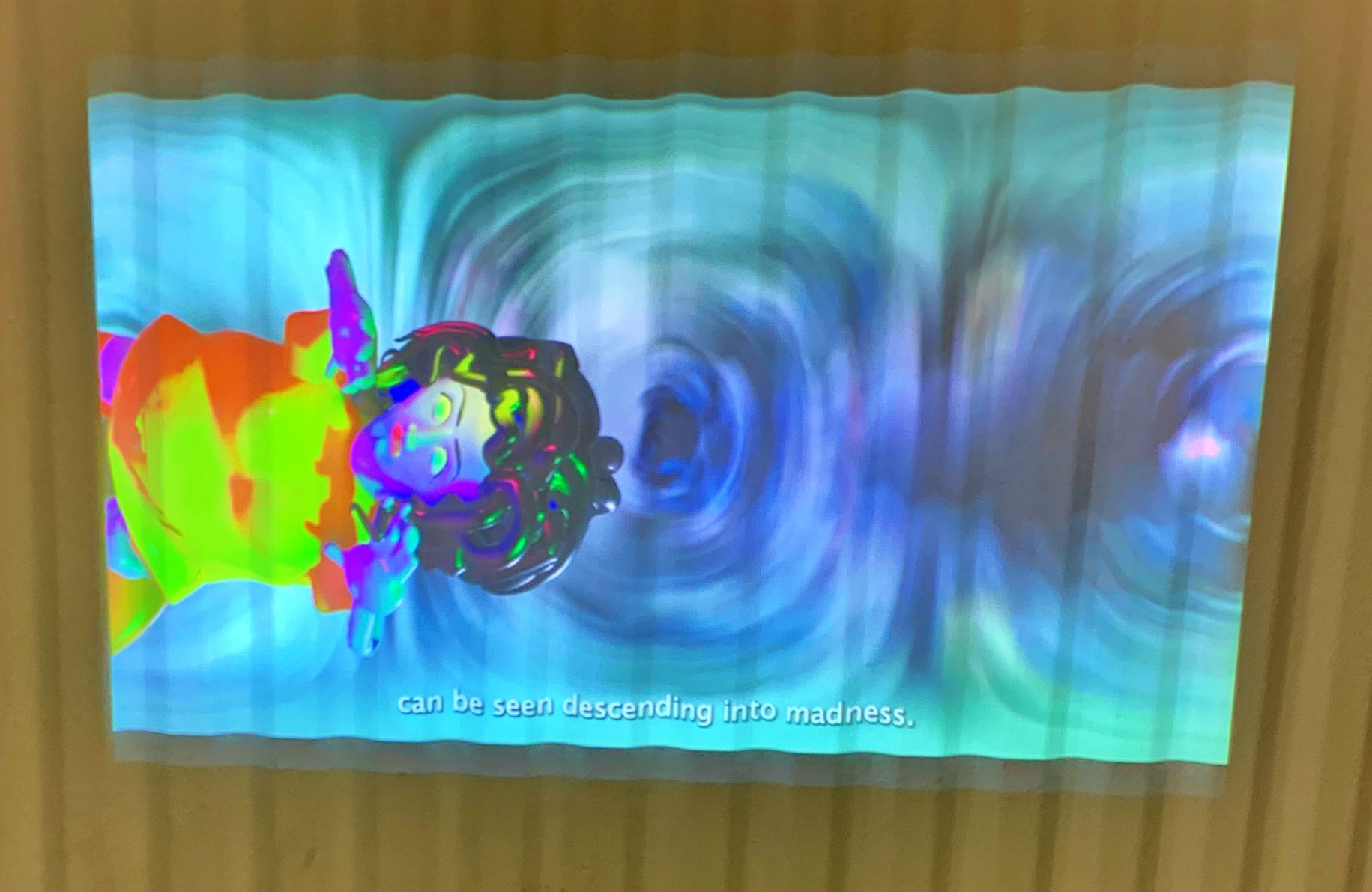
In Unit 2, I began to think about presenting Maze in a gallery space. After I finished making the first part of Maze, it was immediately clear to me that this work was meant to be a projection and not shown on a screen. I don't fully understand this decision yet, but I suspect that the work was trying to claim space on a wall. There's something cartographical, I find, about mapping a projection on a surface, that can feel like a negotiation against an otherwise unyielding object. Which is just as well, because Maze is about negotiating an unyielding system. In March 2022, we exhibited for 'Dialogues' at the Camberwell Space. This was a great learning experience especially as prior to this I didn't really think about presenting my work. Quite honestly, I was baffled as to how I might present digital work, seeing as I often find them clunky in galleries. However, seeing the way in which other students presented their work, I began to think of the ways in which Maze might inhabit a gallery space. Picture 1 (in the photo grid below) shows how I exhibited Maze for 'Dialogues'. As I was testing my projection before the show, I stumbled upon something curious that I wanted to explore further. Picture 2 (below) shows an accidental test that I did on a radiator in the studio. The topography of the radiator generated an interesting effect on the projected image, which I thought worked well for Maze. Though I could not find a surface that would work well for 'Dialogues' and I ended up projecting on a blank wall, the idea stayed with me.
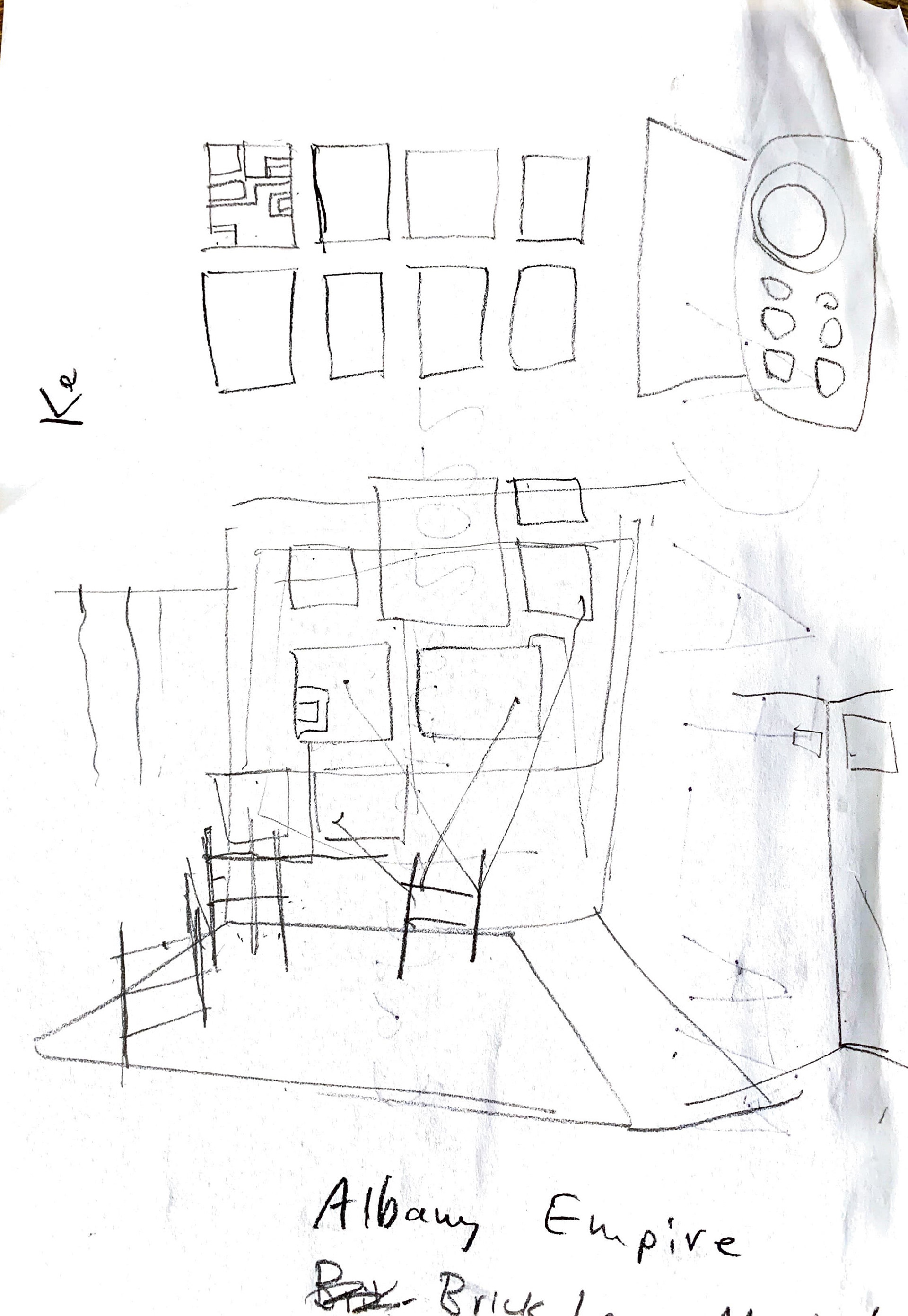
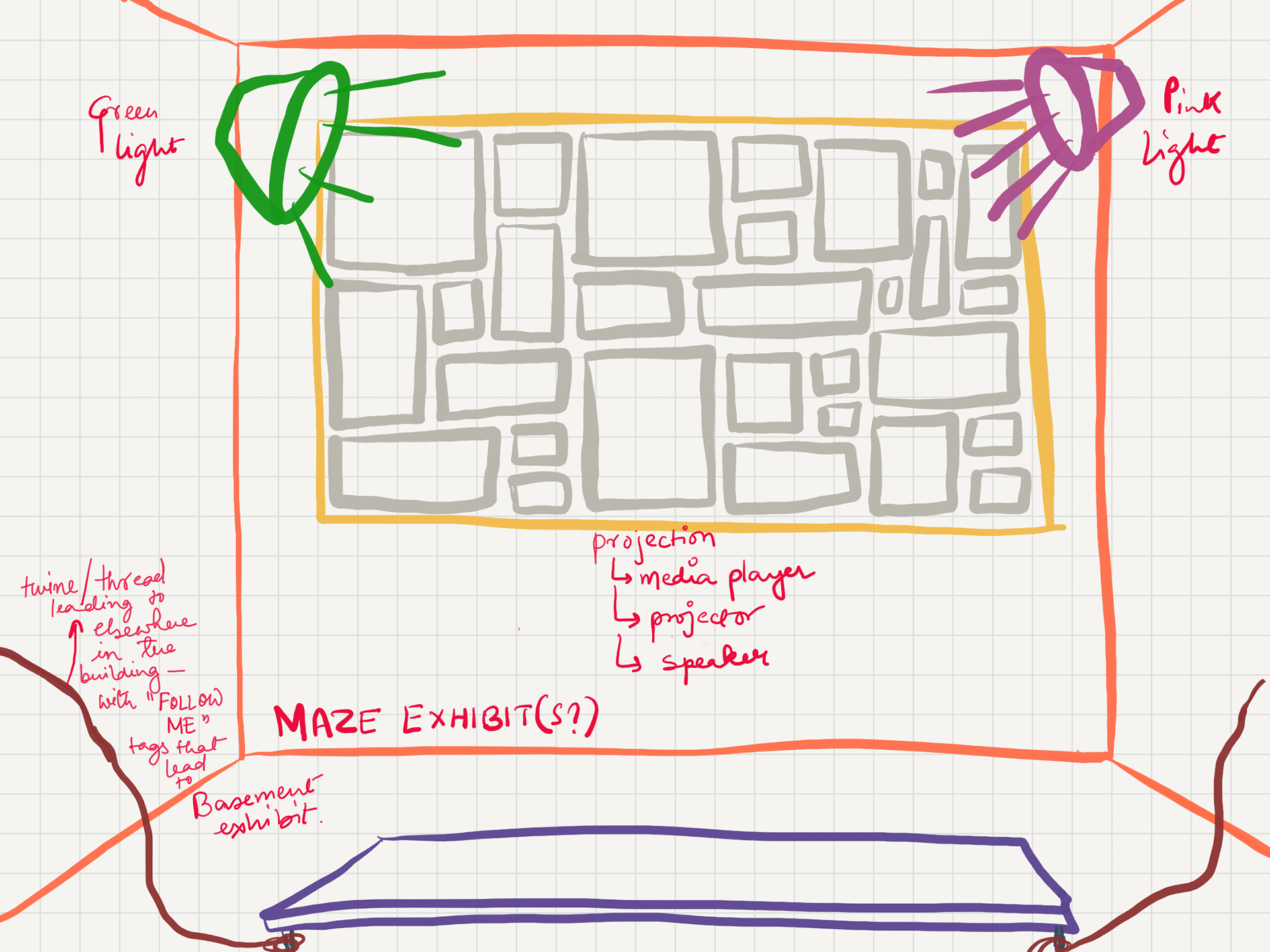
Plans for installing Maze for the July show
I realised that I could extend the metaphor of the Maze to the surface on which I would project and began to consider the many ways in which I could do this. Through tutorials with Hazel Brill and Jennet Thomas, and also Jennet's East London Tour, I began to develop ideas about how I might show Maze. One way was to place blank canvases on the wall to emulate a maze, which I tried to do for the Comp Arts Pop Up show in May 2022 (Pictures 3 and 5). Once I did this, I thought they also emulated pixels on a screen (Picture 6). Though I could not fully translate the metaphor of the maze with the canvases in this instance, I thought the relief introduced to the projected image certainly bears further exploration. The feedback I received with regard to the canvases has been somewhat mixed. One of the criticisms I received was that the canvasses felt like I was projecting on someone else's work and that it did not organically fit into my work. This is definitely a concern that I am hoping might be resolved if I design the placement of the canvasses better. I do find that the canvasses work better with controlled lighting (Picture 7) as the glowing edges makes the relief more prominent, and adds to the world shown in Maze.
Picture 1
Picture 2
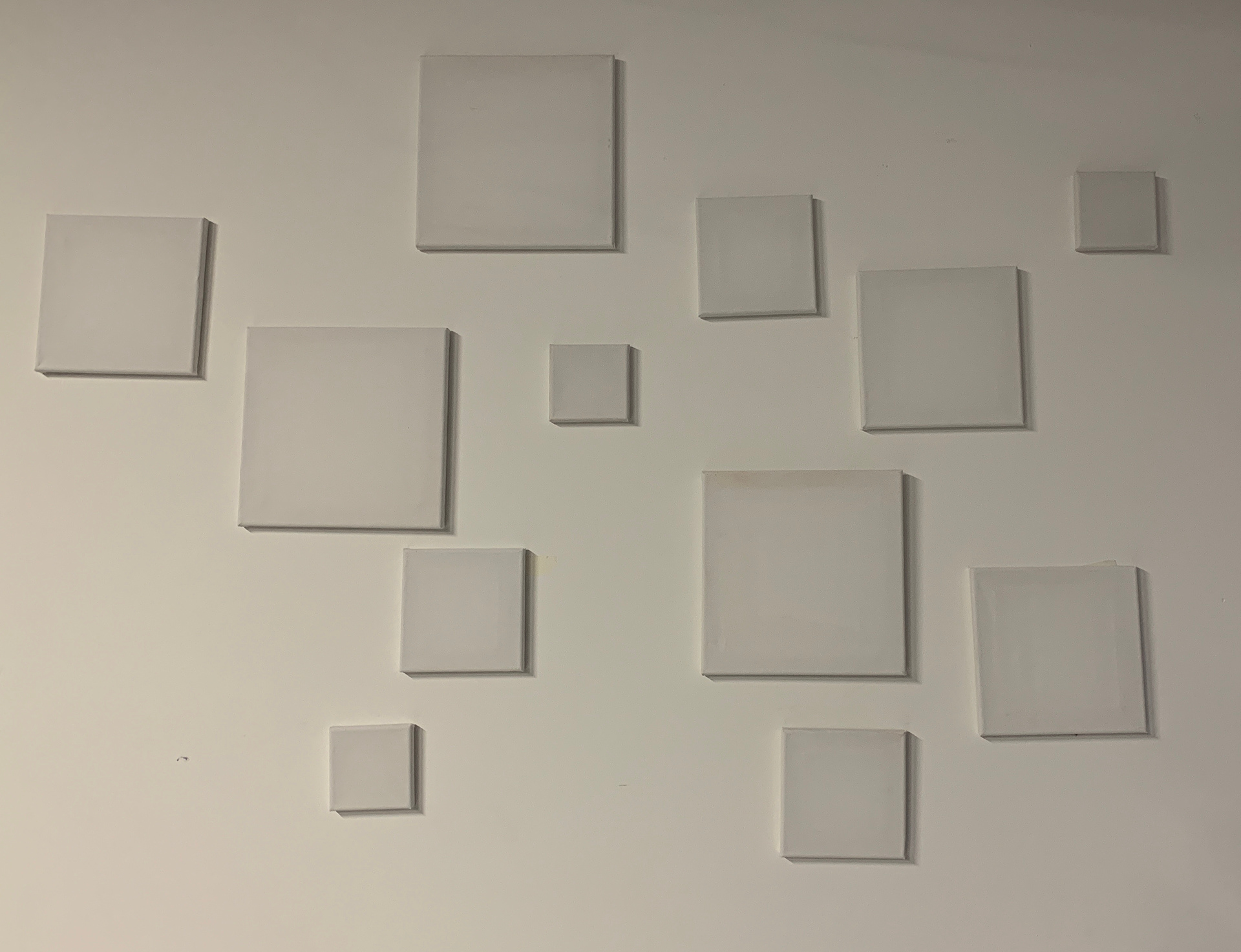
Picture 3
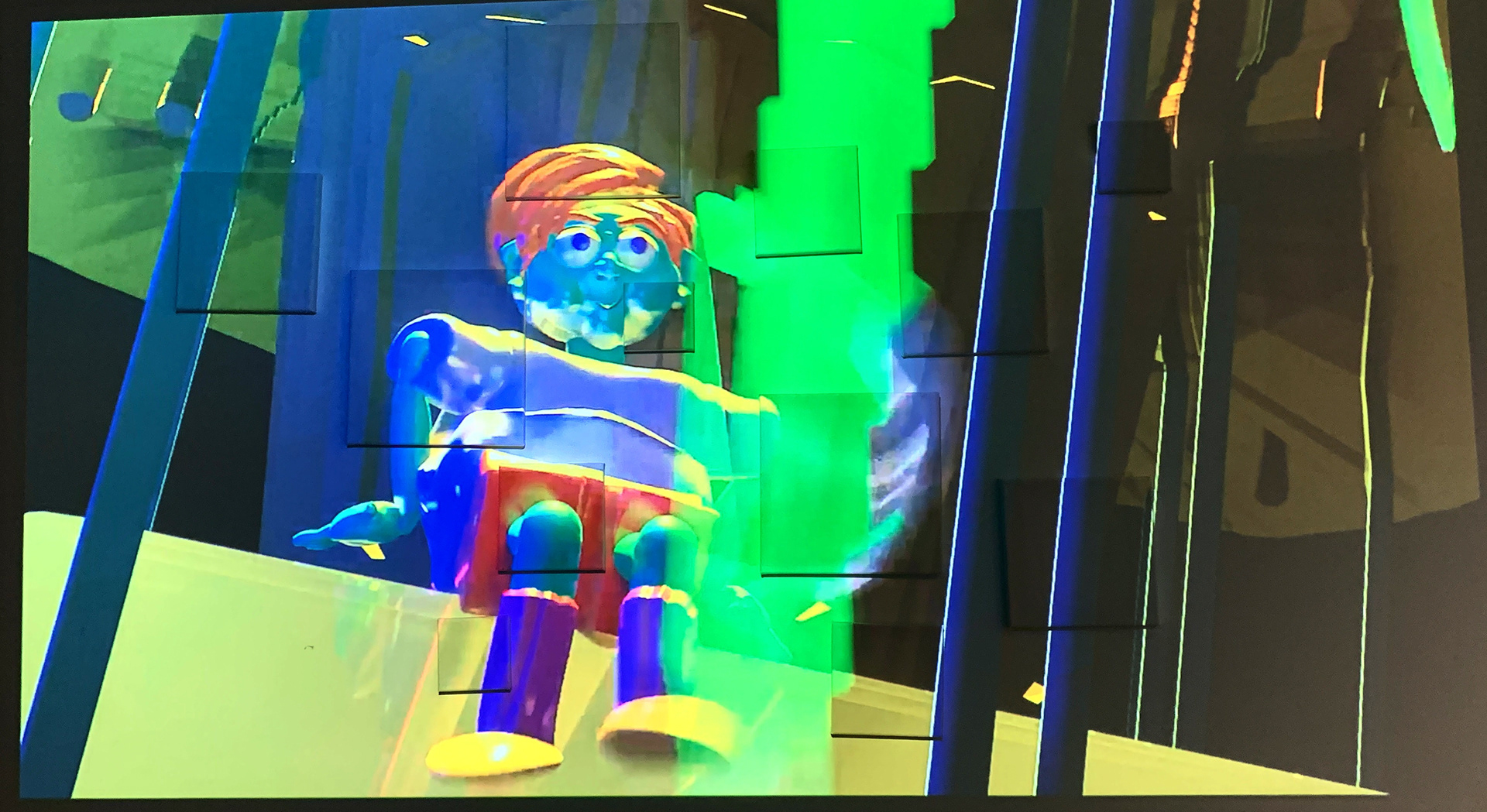
Picture 4
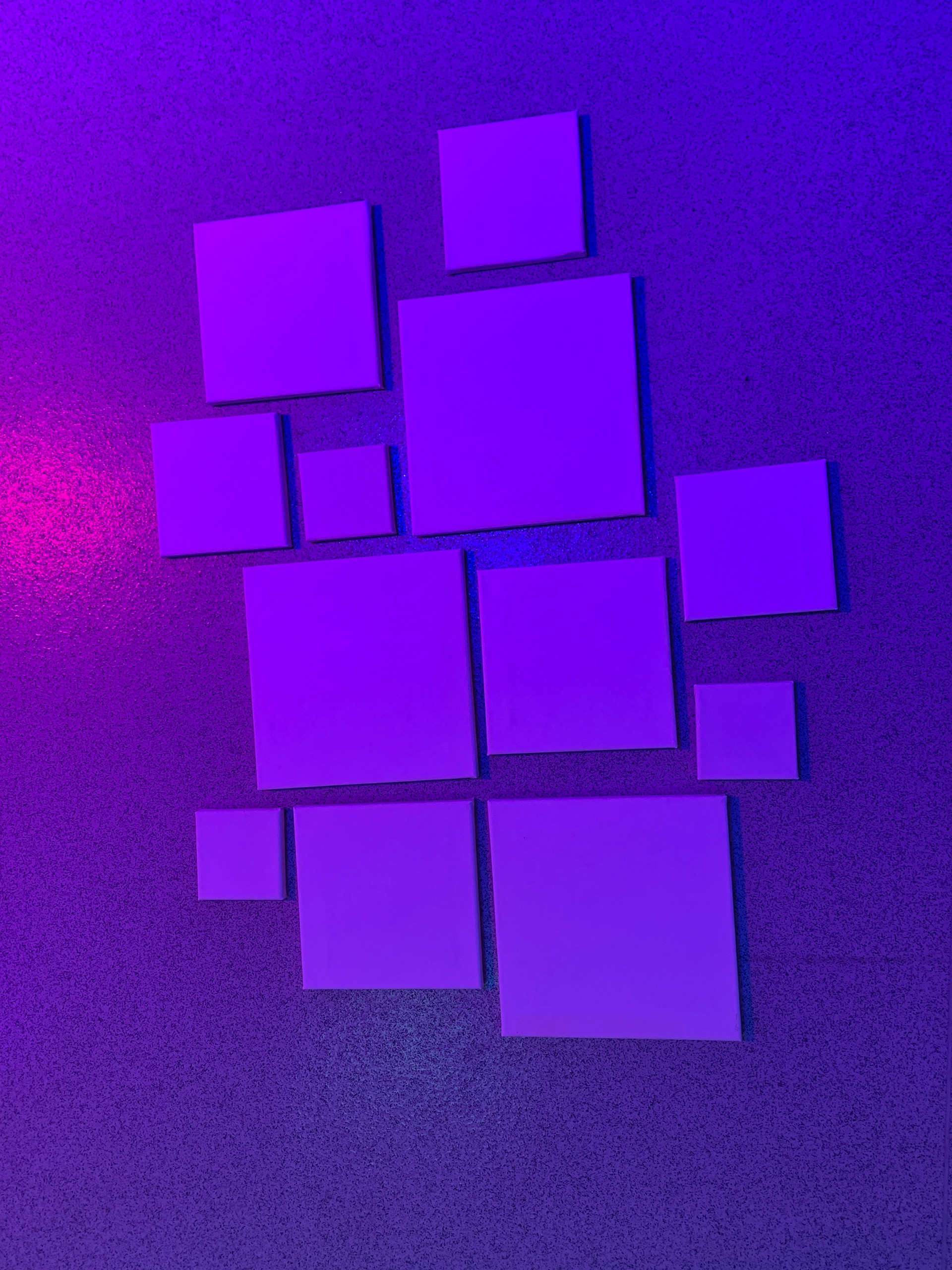
Picture 5
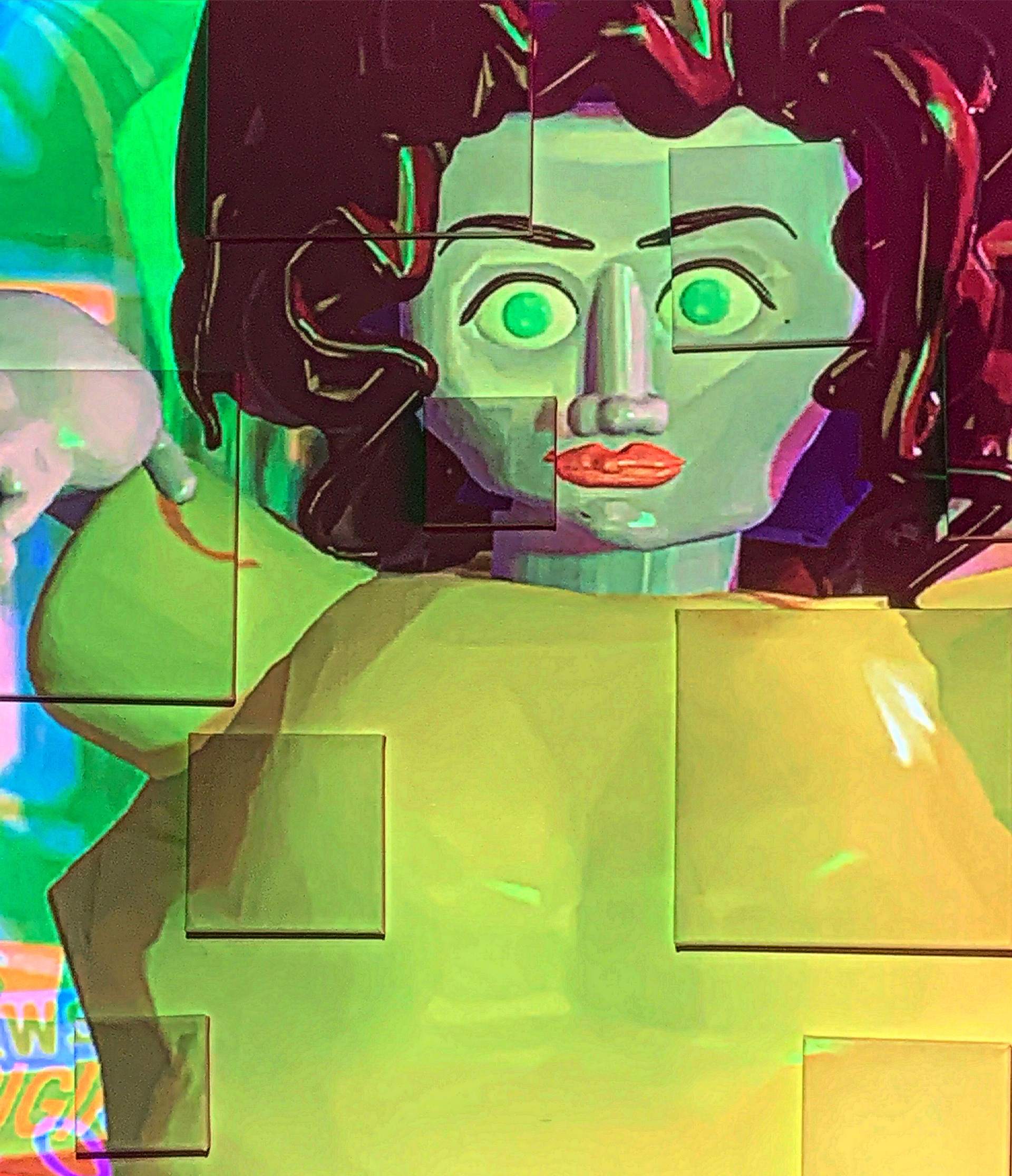
Picture 6
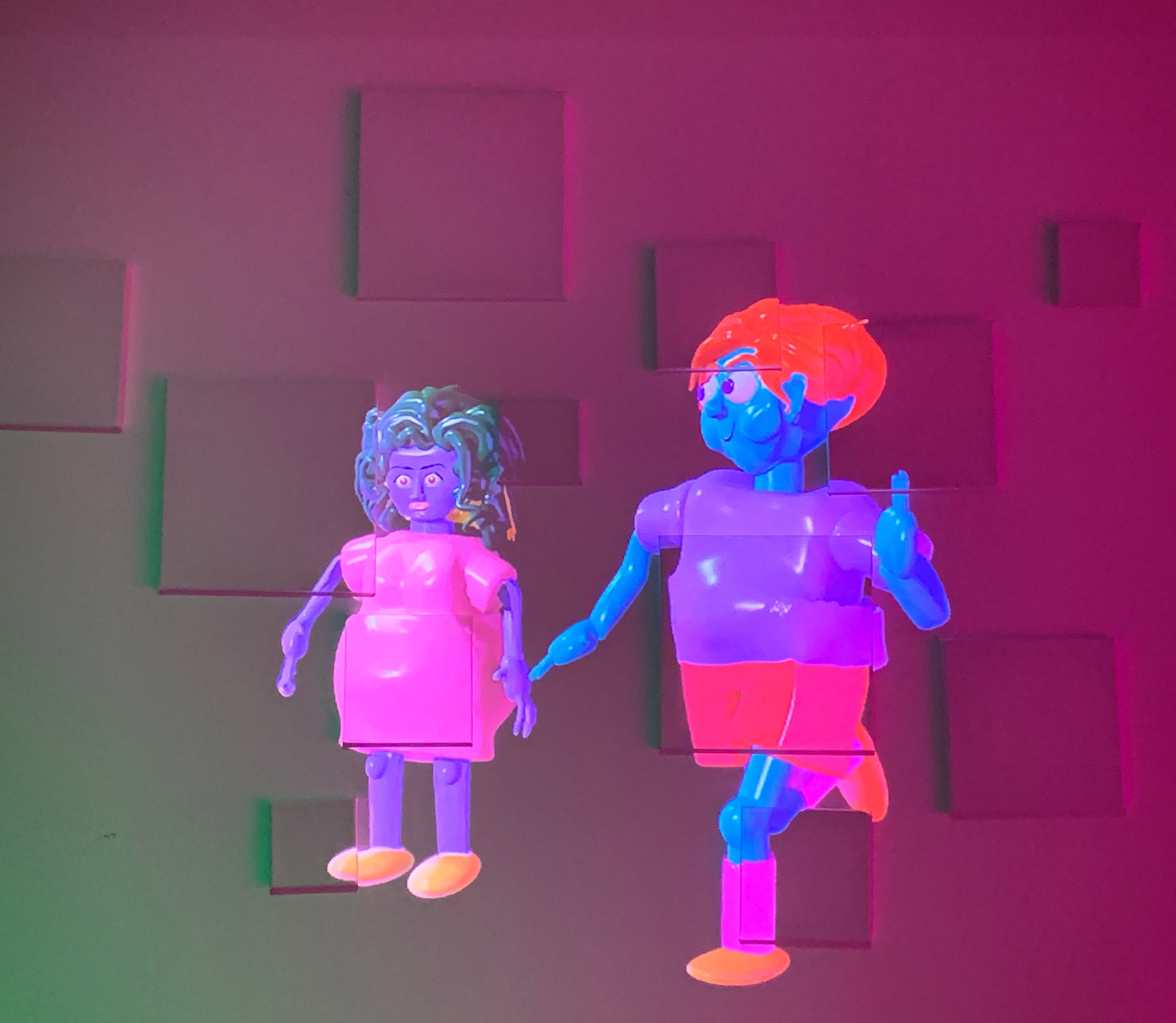
Picture 7
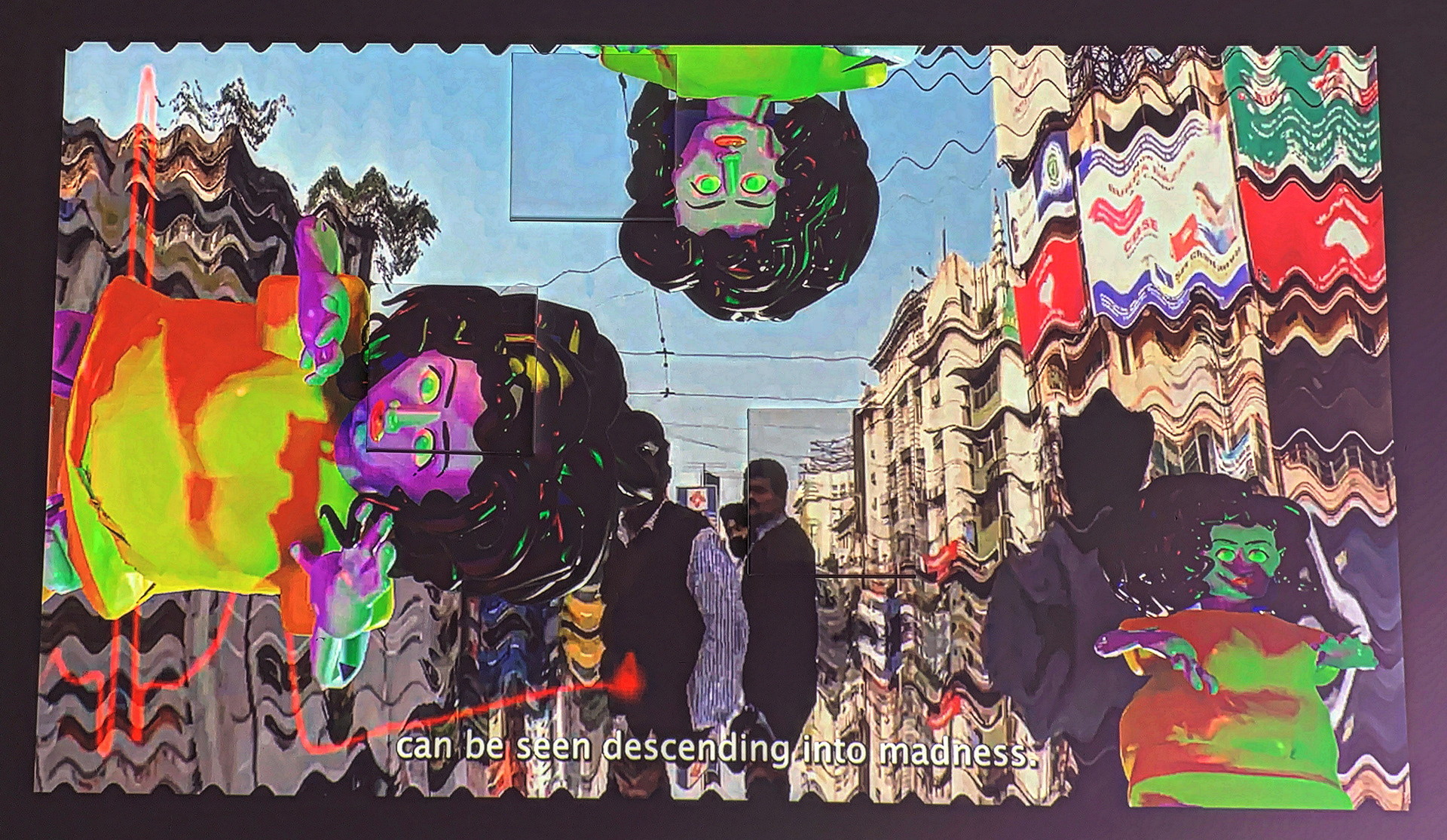
Picture 8
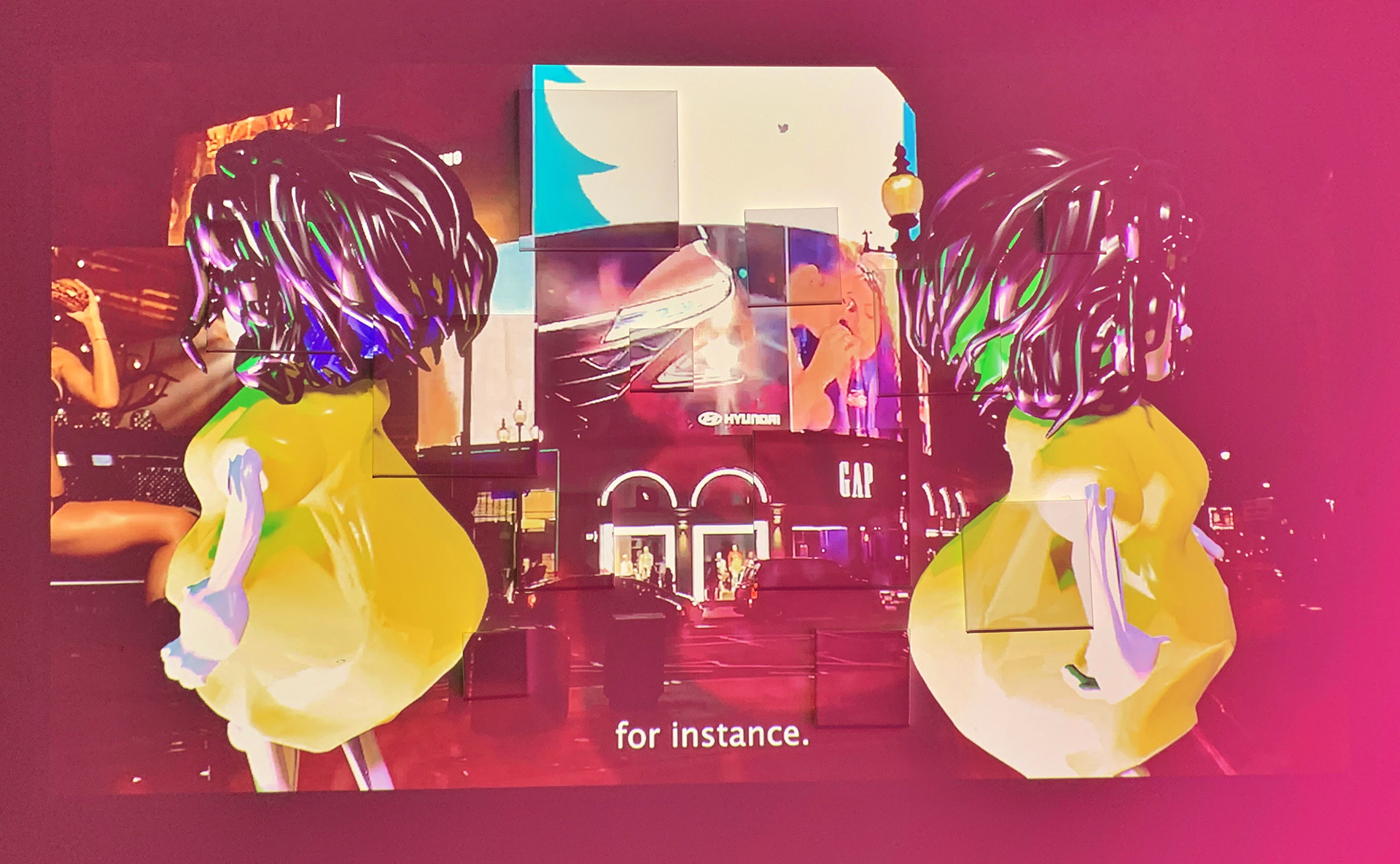
Picture 9